Two countries, one private holiday

Japan and South Korea in one holiday

The palaces of Seoul, the temples of Gyeongju and Busan by the sea, then a flight of about an hour and a half to Kyoto and Tokyo. We plan it as one private holiday: your own guide in each country, on the dates you choose.

Most Japan and South Korea tours sold in the UK are escorted groups on fixed dates. This one is built around you, in whichever order suits the season, at the pace you like to travel.

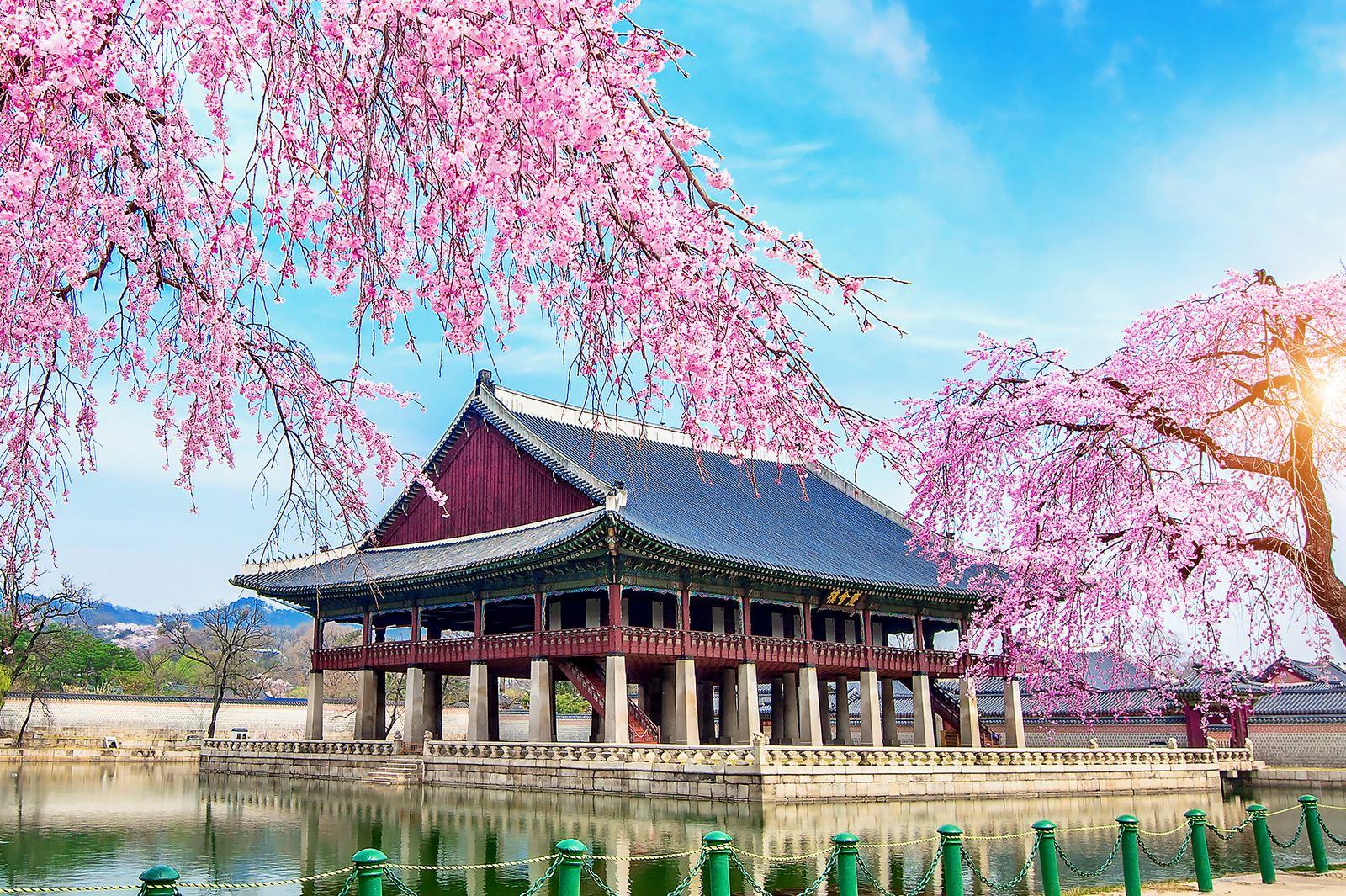
Gyeonghoeru Pavilion at Gyeongbokgung Palace in Seoul, framed by cherry blossom
South Korea
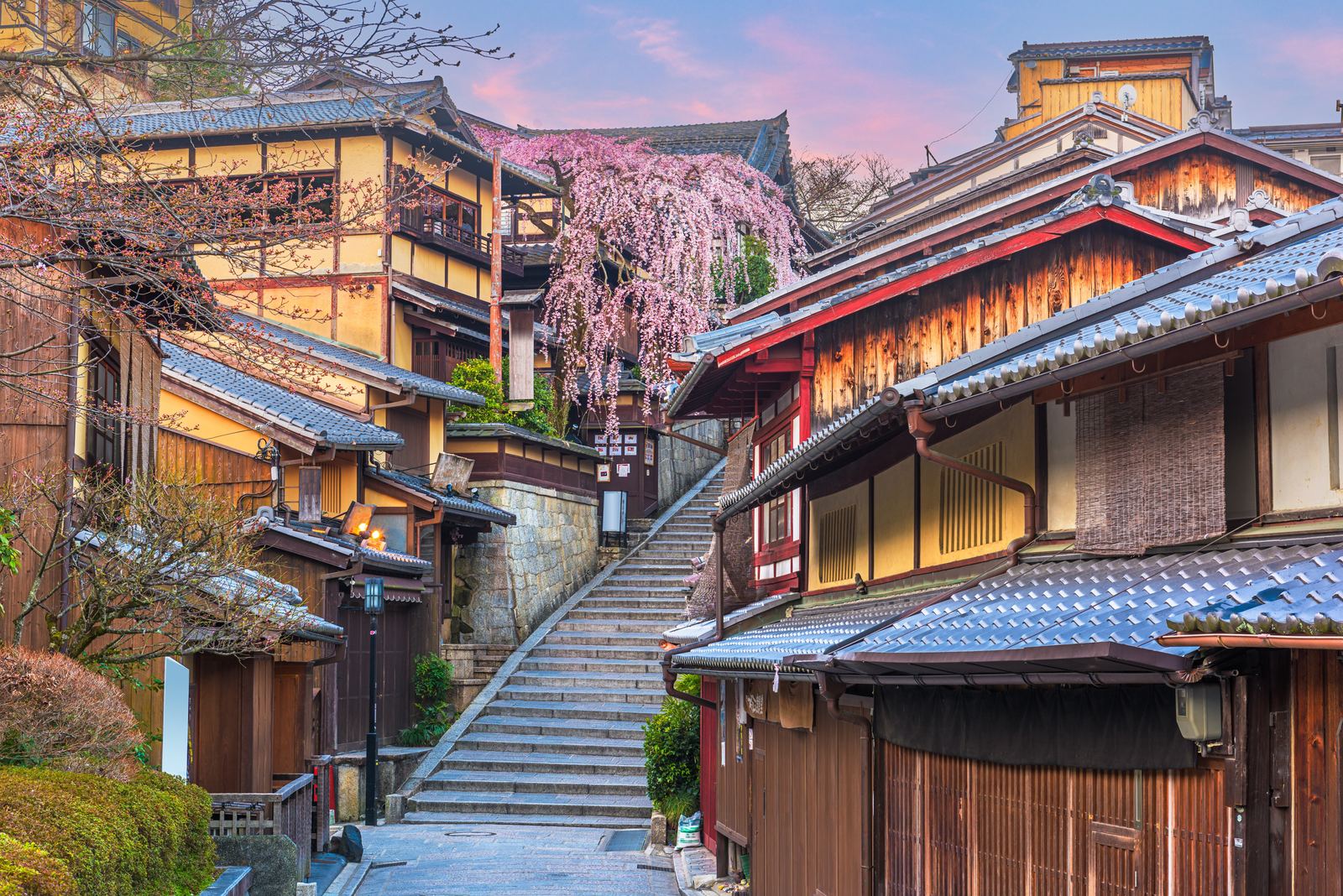
The stone steps of Sannenzaka in the Higashiyama district of Kyoto, with a weeping cherry in blossom
Japan

The short answer

Can you see Japan and South Korea in one trip?

Yes, and it works well. Allow twelve to nineteen nights, fly into one country and home from the other, and cross between them by a short direct flight.

12 to 19 nights

Sixteen nights is the length we recommend for most travellers.

About 1½ hours apart

Busan to Osaka by direct flight, in the middle of the holiday.

April, May, October or November

The months when the weather suits both countries at once.

No visas to arrange

For UK passports at the moment. South Korea's travel authorisation exemption runs to 31 December 2026.

Sample routes

Three ways to combine Japan and South Korea

These are starting points, built from stays we already arrange in each country. Yours is planned around your dates, the pace you like and the places you most want to see. Each route below runs South Korea first; it works just as well the other way round, and in spring we usually start in Japan.

If under two weeks is what you have

The essentials

12 nights

  1. 4 nightsSeoul. Gyeongbokgung Palace, the old lanes of Bukchon, and a day at the Demilitarised Zone if you wish.
  2. 2 nightsBusan. High-speed train from Seoul; the fish market, Gamcheon village and the sea front.
  3. 3 nightsKyoto. Fushimi Inari early, the Golden Pavilion, Arashiyama.
  4. 3 nightsTokyo. Bullet train from Kyoto; Senso-ji, gardens and the food halls.

Flight between the countries: Busan to Osaka on day 7.

Room to rest between the big days

The one we recommend

16 nights

  1. 4 nightsSeoul. The royal palaces, Bukchon and Insadong, with a free day.
  2. 2 nightsGyeongju. High-speed train from Seoul; Bulguksa Temple and the royal burial mounds of the old Silla capital.
  3. 2 nightsBusan. The fish market, Gamcheon village and the sea front.
  4. 4 nightsKyoto. Temples and gardens, with a day in Nara.
  5. 4 nightsTokyo. Bullet train from Kyoto; the city at your own pace before the flight home.

Flight between the countries: Busan to Osaka on day 9.

Adds hot springs and Mount Fuji

With Hakone

19 nights

  1. 4 nightsSeoul. The royal palaces, Bukchon and Insadong, with a free day.
  2. 2 nightsGyeongju. Bulguksa Temple and the royal burial mounds.
  3. 3 nightsBusan. The fish market, Gamcheon village and a day by the sea.
  4. 4 nightsKyoto. Temples and gardens, with a day in Nara.
  5. 2 nightsHakone. A traditional inn with hot-spring baths, and Mount Fuji when the weather allows.
  6. 4 nightsTokyo. The city at your own pace before the flight home.

Flight between the countries: Busan to Osaka on day 10.

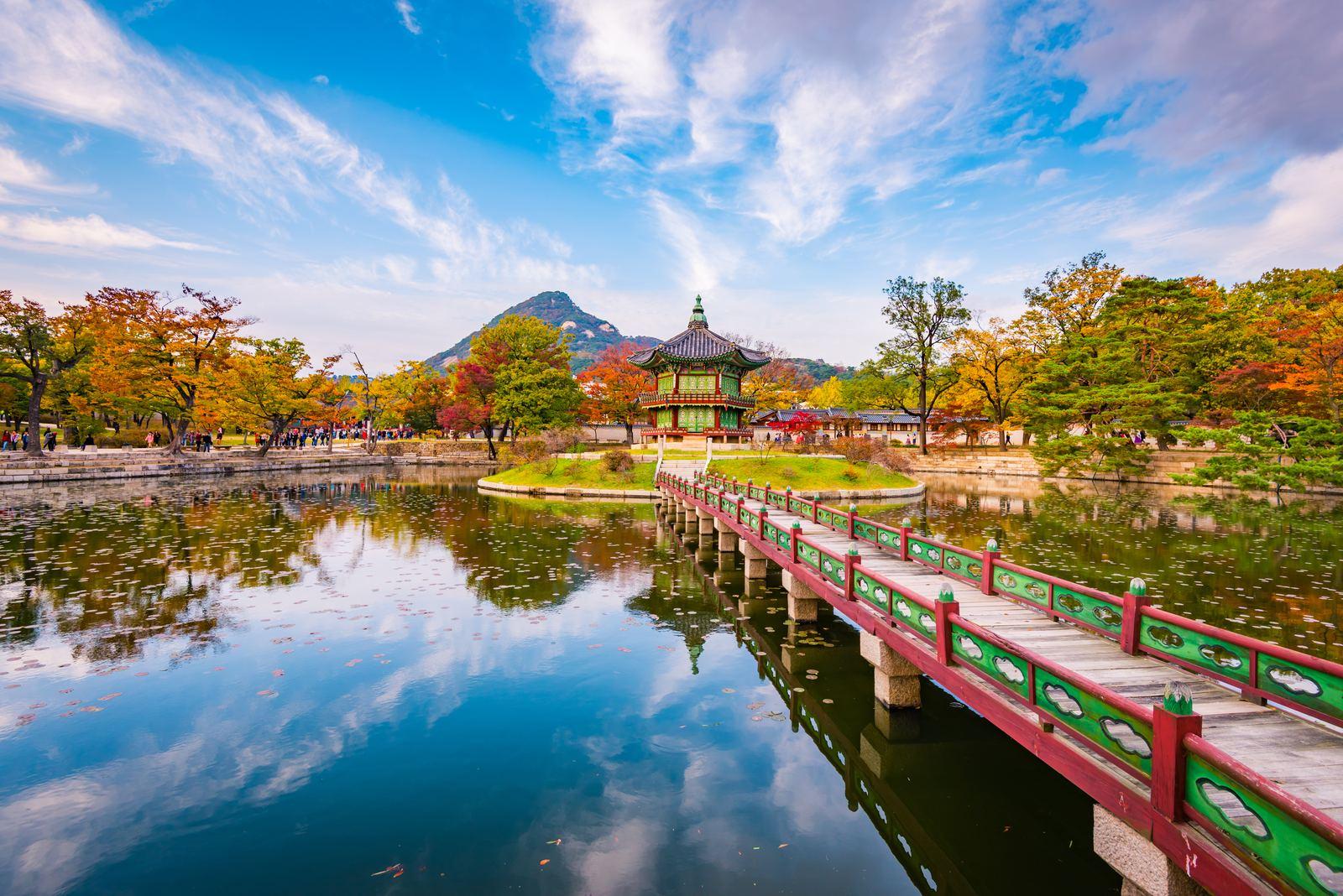
The bridge to Hyangwonjeong Pavilion at Gyeongbokgung Palace in Seoul, reflected in its pond in autumn
Gyeongbokgung Palace in autumn
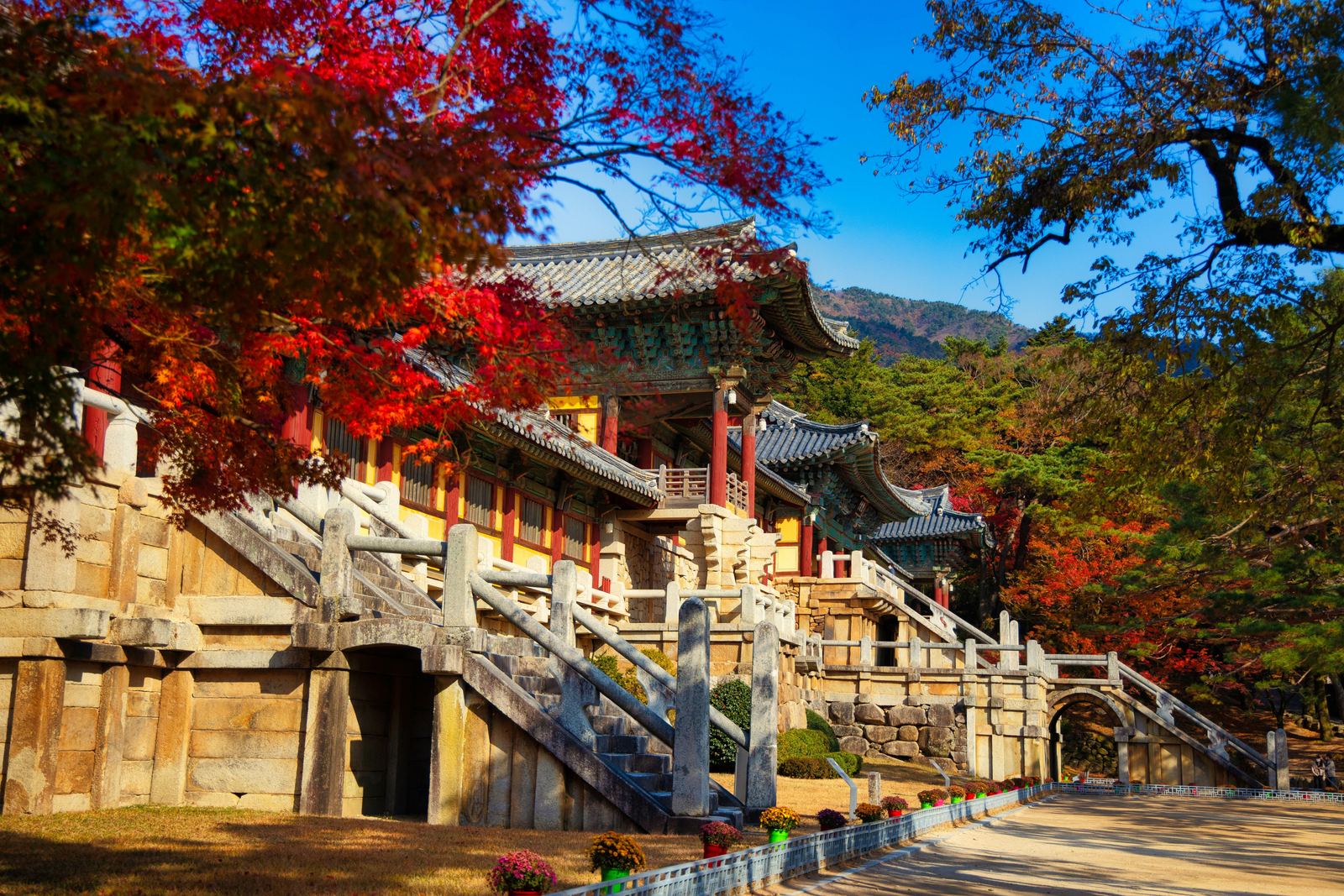
The stone stairways of Bulguksa Temple in Gyeongju framed by red autumn maples
Bulguksa Temple in autumn
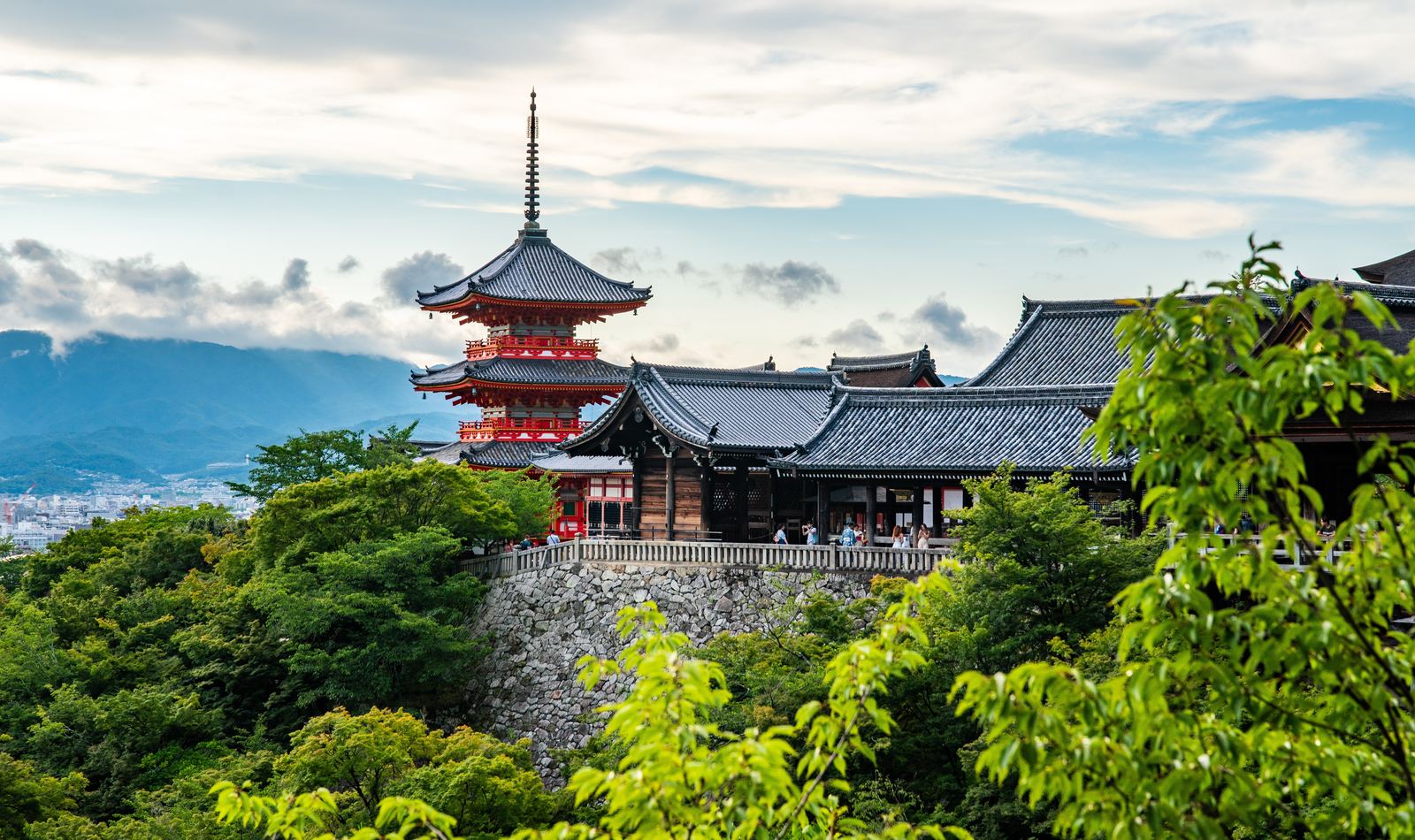
The red pagoda and halls of Kiyomizu-dera above the trees in Kyoto
Kiyomizu-dera, Kyoto
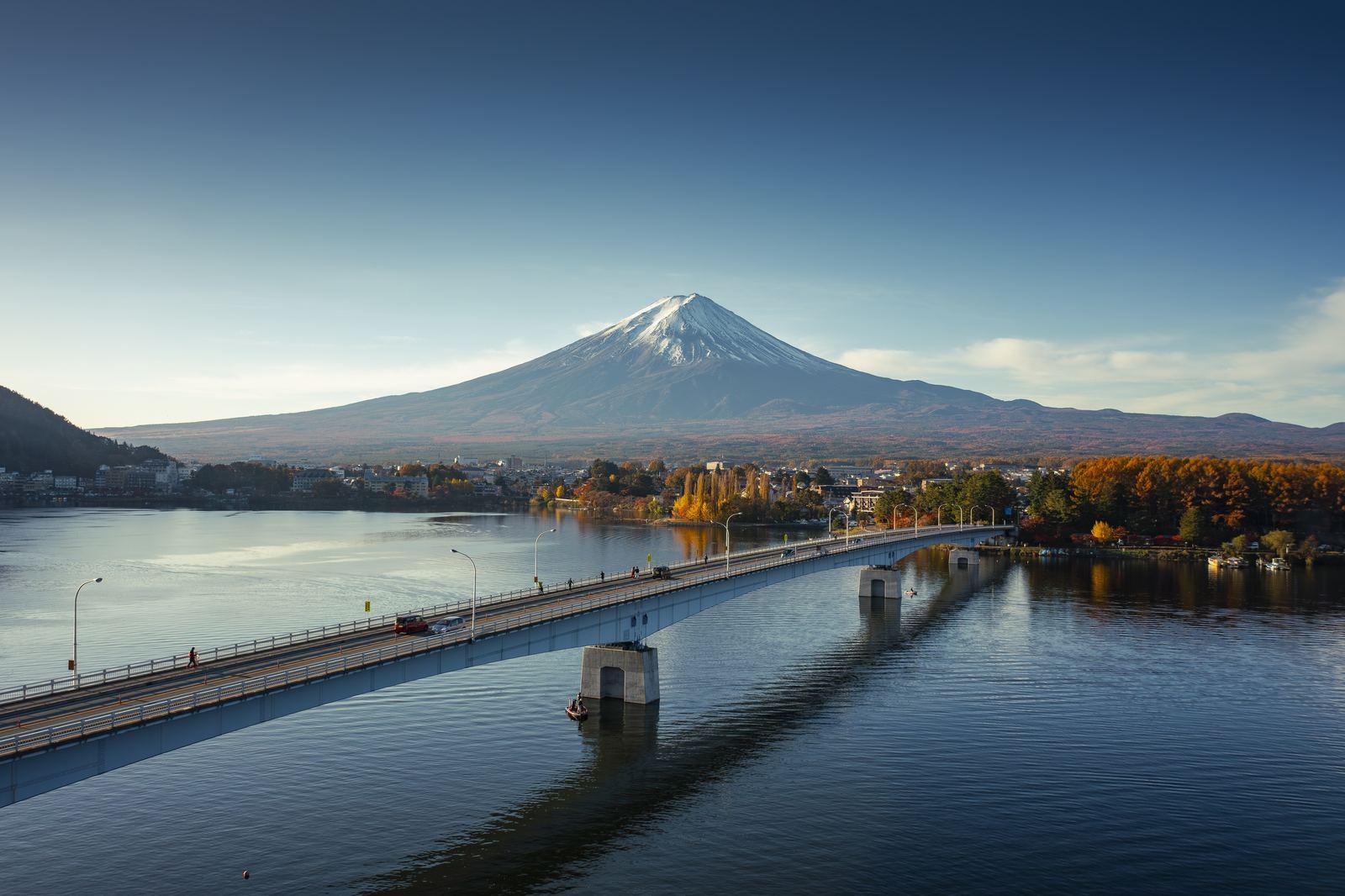
Mount Fuji above Lake Kawaguchiko and its bridge in the early morning
Mount Fuji from Lake Kawaguchiko

Each holiday is priced individually, because the cost depends on your dates, hotels and length of stay. Prices cover the holiday on the ground, including the flight between South Korea and Japan; international flights from the UK can be added on request.

Timing

Which country first, and when to go

Spring: Japan first

Cherry blossom is usually in full bloom in Tokyo around 31 March and in Kyoto around 4 April. It reaches Seoul about a week later, around 10 April. Start in Japan at the end of March and cross to South Korea in the second week of April. These are long-term averages, and the dates move by a few days each year.

Autumn: South Korea first

Autumn colour peaks around Seoul in late October and in Kyoto about a month later, so one holiday catches one country at its peak and the other close to it. Start in Seoul in early November for the last of the Korean colour, and reach Kyoto in the second half of the month as the maples turn.

Average temperature by month, in °C
MonthSeoulBusanKyotoTokyoWhat to know
April13°14°14°14°Mild in both. Cherry blossom in Tokyo and Kyoto at the start of the month, and in Seoul about a week later.
May18°18°20°19°Warm in both. Avoid 29 April to 5 May in Japan, a run of public holidays.
October15°18°18°18°Dry and clear in both. Autumn colour around Seoul in the last week.
November8°12°13°13°Autumn colour in Kyoto and Tokyo in the second half. Seoul is cold by the end of the month.

Monthly averages across day and night, 1991 to 2020, from the Korea Meteorological Administration and the Japan Meteorological Agency. Afternoons are several degrees warmer. For South Korea month by month, see the best time to visit South Korea.

How it works

One holiday, planned as a whole

  • One itinerary and one point of contact for both countries, from the day you enquire to the day you fly home
  • Your own English-speaking guide and private car in South Korea, with reserved seats on the high-speed train
  • Your own English-speaking guide on your sightseeing days in Japan, with reserved seats on the bullet train
  • In Japan, your main suitcases are sent ahead to the next hotel, so you travel with a small bag
  • Three or four nights in most places, and one main sight a day
  • The flight between South Korea and Japan booked as part of the holiday

Good to know

Entry rules and getting there

South Korea. UK passport holders can visit for up to 90 days without a visa. They are exempt from South Korea's online travel authorisation, the K-ETA, until 31 December 2026. Nothing has been confirmed for 2027 yet, so for 2027 travel we confirm what you need for your dates when you book. There is also an arrival card, which you can complete online before you fly.

Japan. British visitors can stay for up to 90 days as tourists without arranging anything in advance.

Between the two. Direct flights link Busan and Seoul with Osaka and Tokyo several times a day. Busan to Osaka takes about an hour and a half.

From the UK. There are direct flights from London to both Seoul and Tokyo, so you can fly into one country and home from the other. Allow about 13 hours on the way out and longer on the way home.

Checked on 23 November 2026 against GOV.UK travel advice for South Korea and Japan. Entry rules change, so check both pages before you travel.

Common questions

Japan and South Korea together, answered

Can you visit Japan and South Korea together?

Yes. The two countries are a short flight apart: Busan to Osaka takes about an hour and a half, and Seoul to Tokyo about two hours. A combined holiday usually sees Seoul, Gyeongju and Busan in South Korea, then Kyoto and Tokyo in Japan. We plan it as one private holiday with one itinerary, so the flight between the two is simply the middle day of your trip.

How many days do you need for Japan and South Korea?

Allow at least twelve nights, and sixteen if you can. Twelve nights covers Seoul, Busan, Kyoto and Tokyo at a steady pace. Sixteen nights is the length we recommend for most travellers, because it adds Gyeongju and leaves three or four nights in each main stop. Less than twelve nights means more time in transit than at the sights.

Which month is best to visit Japan and South Korea?

April, May, October and November suit both countries at once. Three periods are best avoided: 29 April to 5 May in Japan (a run of public holidays known as Golden Week), mid-August in Japan, which is hot, humid and busy with the Obon holiday, and the Korean harvest festival of Chuseok, which in 2027 runs from 14 to 16 September. July and August are hot and wet in both countries.

Should I visit Japan or South Korea first?

Either order works, and the season decides. In spring, start in Japan: cherry blossom is usually in full bloom in Tokyo around 31 March and in Kyoto around 4 April, and reaches Seoul around 10 April. In autumn, start in South Korea: the colour peaks around Seoul in late October and in Kyoto about a month later, so begin in Seoul in early November and reach Kyoto in the second half of the month.

How do you get from South Korea to Japan?

By direct flight. Busan to Osaka takes about an hour and a half, Seoul to Osaka just under two hours, and Seoul to Tokyo about two hours. All of these routes run several times a day. We usually use Busan to Osaka, because it joins the end of the Korean route to the start of the Japanese one without doubling back.

Is there a ferry between Japan and South Korea?

Yes, one a day in each direction between Busan and Fukuoka. The crossing from Fukuoka takes about six hours by day, and the sailing from Busan runs overnight. The fast ferry that used to make the crossing in under four hours was withdrawn in December 2024. For most holidays the flight is the better choice, because it takes you straight to Osaka for Kyoto.

Do British travellers need visas for Japan and South Korea?

Not for a holiday. Japan lets British visitors stay for up to 90 days without arranging anything in advance. South Korea lets UK passport holders visit for up to 90 days without a visa, and they are exempt from its online travel authorisation, the K-ETA, until 31 December 2026; nothing has been confirmed for 2027 yet, so for 2027 travel we confirm what you need for your dates when you book. South Korea also asks for an arrival card, which you can complete online. Entry rules checked on 23 November 2026.

How much is a trip to Japan and South Korea?

We price each combined holiday individually, because the cost depends on your dates, the hotels you choose and how long you spend in each country. Tell us those and we will send you a written quote, with no obligation. Our prices are for the holiday on the ground (hotels, guides, private transfers, trains and the flight between the two countries); international flights from the UK can be added on request.

Is a Japan and South Korea tour too tiring for travellers in their 60s and 70s?

Not when it is planned for it. We keep to three or four nights in most places and one main sight a day. In South Korea you have a private car and your own guide, so you are never keeping up with a group. In Japan your main suitcases are sent ahead to the next hotel, so you board the bullet train with a small bag. Tell us how far you like to walk and we plan each day around that.

Can I do this holiday on my own?

Yes. It is a private holiday, so it runs for one traveller just as it does for two. Your guide is with you on the sightseeing days and the rest of the time is your own. We quote for a room of your own in every hotel, so you can see the full cost before you decide.

Can I add Jeju Island, Hakone or China?

Yes. Jeju Island adds three nights, with a short flight from Seoul or Busan. Hakone, for hot springs and a view of Mount Fuji, adds two nights between Kyoto and Tokyo. China can be joined to either country, and we have a separate page on China and Japan in one holiday. Each one adds days, so we would plan the whole route with you.
Plan yours

Tell us your dates and we will plan the route

Tell us roughly when you would like to travel, how long you have and anything you most want to see. We will come back with a route and a written quote, with no obligation. Or call us on 020 8191 1125.

Fields marked * are required. We will never share your details with third parties for marketing purposes.

Japan and South Korea Holidays from the UK: Private Tours | Holidays to Asia