The Hakone Ropeway: accessible for wheelchair users
Wheelchair users can ride the Hakone Ropeway in their own wheelchair, and each station along the route lends wheelchairs free of charge — useful if you are travelling without your own chair. The ropeway climbs through dramatic volcanic scenery above Owakudani, one of its stations, and on clear days Mount Fuji is visible from both the ropeway gondolas and from Owakudani itself.
One important caveat: the ropeway can be suspended due to bad weather, strong winds or maintenance. If a Fuji view is the main reason for your visit, build in a contingency day or check conditions the morning you plan to go. Our specialists can advise on the best time of year for clear skies.
Lake Ashi: the sightseeing cruise
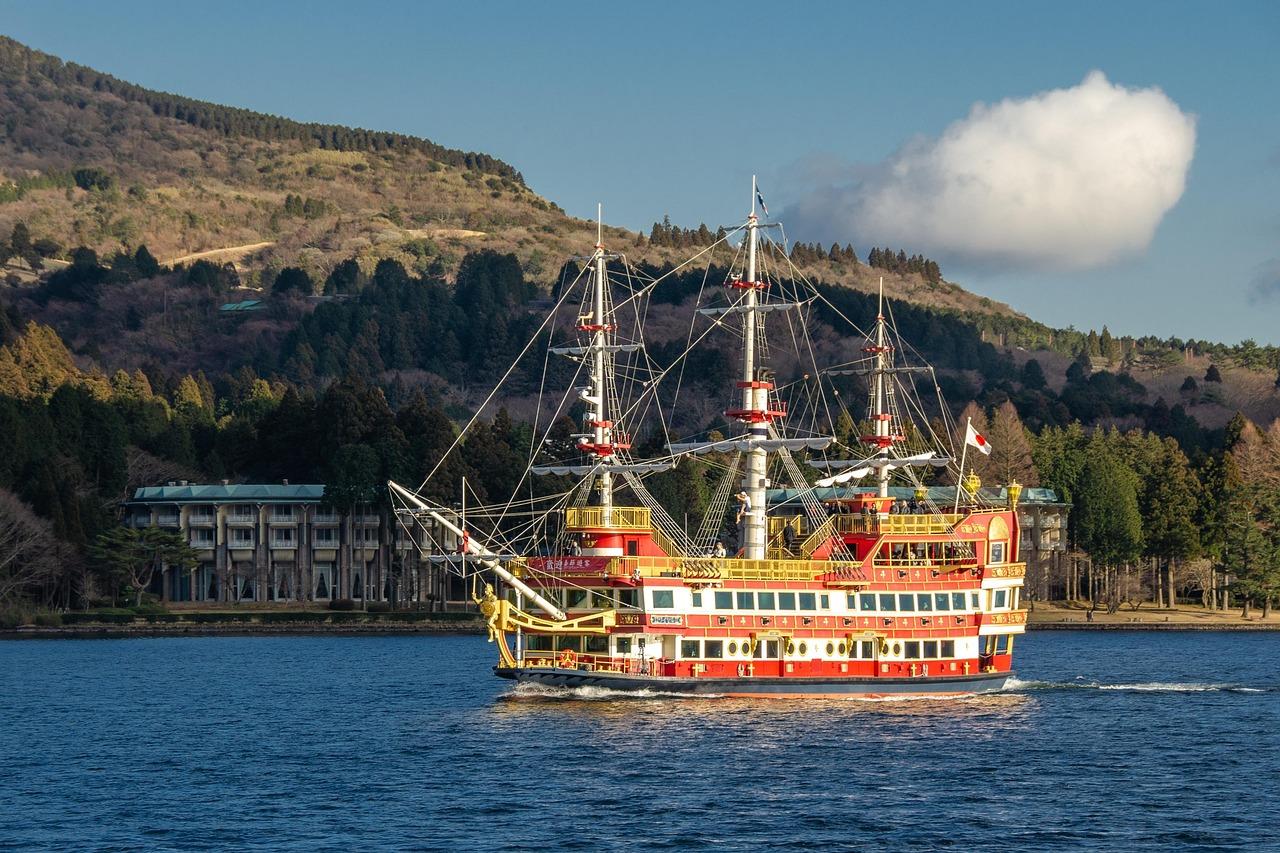
All three Hakone sightseeing ships on Lake Ashi accept wheelchair users boarding in their own wheelchair. Every ship has accessible toilets, and each port lends one wheelchair free — so again, you do not need to bring your own. The cruise across the lake is one of the gentlest ways to spend a Hakone afternoon, and on clear days Mount Fuji rises behind the torii gate on the shore.
The combination of the ropeway down to the lake and the sightseeing ship across it forms the heart of the classic Hakone round course, and both are designed to be used by people who cannot manage long walks or steep terrain.
The honest part: Hakone's hills
Away from the main round course — ropeway, cable car, boat and train — many roads around Hakone are very steep. If you stray from the usual circuit on foot, it can quickly become hard going, especially in the afternoon when legs are tired.
Our practical advice is to plan your day around the round course and not to plan long walks between stops. If you are travelling with someone who wants to walk further, the sightseeing ships and the ropeway stations are good places to split up and meet again. Tell us how far you can comfortably walk and we will plan a day around that distance, with transfers where needed.
If you are using a wheelchair or have significant mobility needs, our accessible holidays page explains how we plan each route around your needs and confirm the details before you travel.
Seeing Mount Fuji from Hakone
Mount Fuji is visible from the Hakone Ropeway and from Owakudani on clear days — no climbing required. The view across Lake Ashi with Fuji behind it is one of Japan's most iconic scenes, and it is entirely achievable from the sightseeing ship or the lakeside at Moto-Hakone without any difficult walking.
Fuji is most often clear in winter and early spring; summer and autumn bring clouds that can hide it for days at a time. We plan Hakone days at the best time of year for visibility and advise on the morning timing that gives the clearest light. See our guide to seeing Mount Fuji without the climb for more on viewpoints across the region.
Hakone with limited mobility: planning your day
The Hakone round course — Hakone-Yumoto by train, up by cable car and ropeway, across the lake by ship, back by bus — is designed as a circuit and works well at a gentle pace. Wheelchair users and travellers who cannot manage steep paths can complete the most rewarding parts of it without difficulty, using the ropeway and the Lake Ashi ships.
The key things to arrange in advance are transport to and from Hakone (a private car is far easier than the local bus if you use a wheelchair), the ropeway and ship timings, and your hotel if you are staying overnight. Many Hakone ryokan have been updated with ramps, handrails and lifts, though it is worth confirming the accessible details of your specific room before you book — roll-in showers are much less common in Japanese hotels than elsewhere, and accessible bathrooms often have a floor drain beside the bath rather than a roll-in shower.
Tell us your needs early — the earlier we know, the more we can confirm and plan around. Tell us your dates and we will price it for you. For Japan holidays more broadly, see our Japan holidays page and our guide to Japan for the over-70s.
Facts checked by our Japan team on 19 November 2026.
