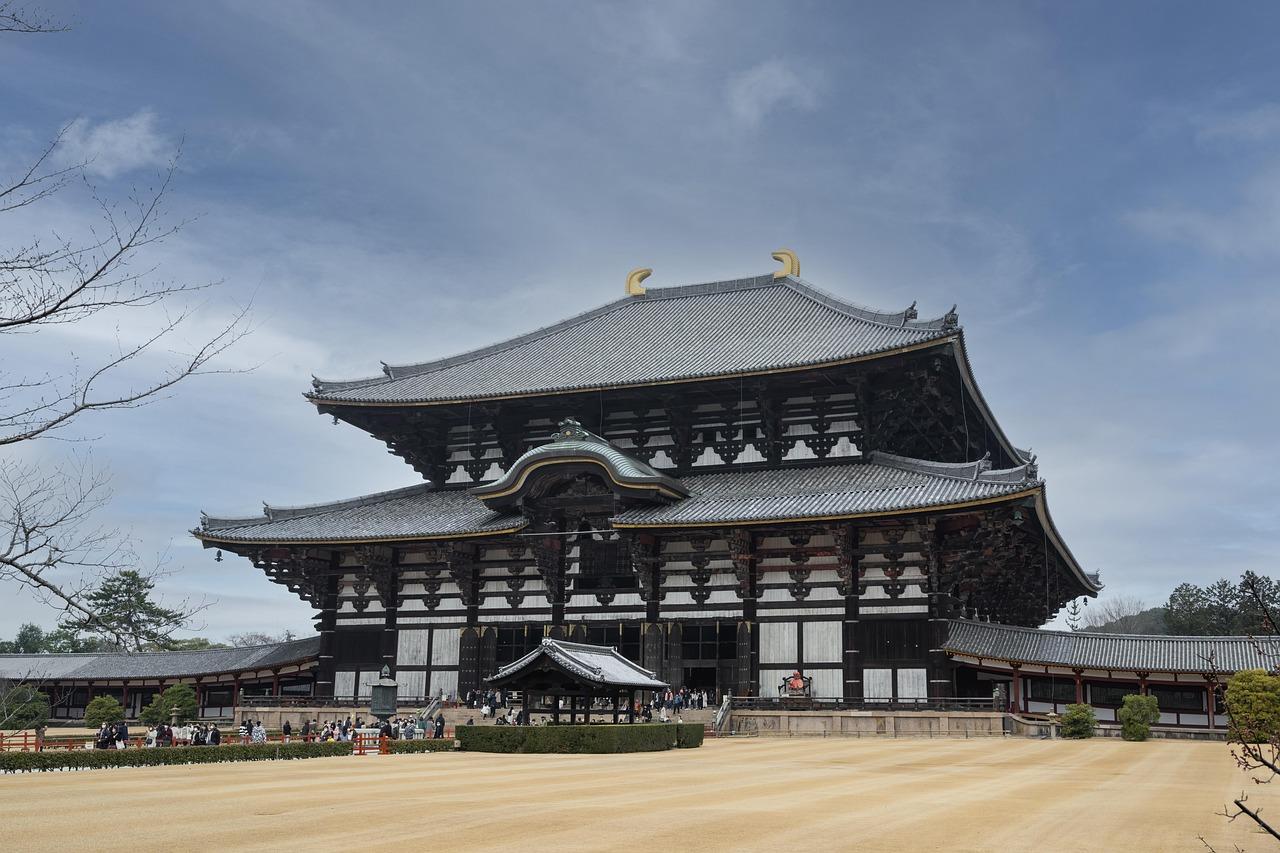
Todai-ji Great Buddha Hall: the slope entrance
Todai-ji is the centrepiece of a Nara visit, and wheelchair users enter its corridor and Great Buddha Hall by a slope to the left of the front entrance — there is no need to tackle the main steps. Wheelchairs can be borrowed from the security office in front of the central gate, so if you are walking but expect to tire, it is worth picking one up before you go in rather than after.
The hall itself is vast and atmospheric, housing a 15-metre bronze Buddha. Once inside on the flat, most visitors spend 20 to 30 minutes without covering great distances. The surrounding gravel paths between the outer gate and the hall entrance are firm enough for wheelchairs and walking frames, though gravel is never as smooth as pavement — take it steadily.
If you are planning accessible holidays in Japan, it is worth checking each sight's access details close to your travel dates, as arrangements can change.
The deer park: mostly flat, some things to watch
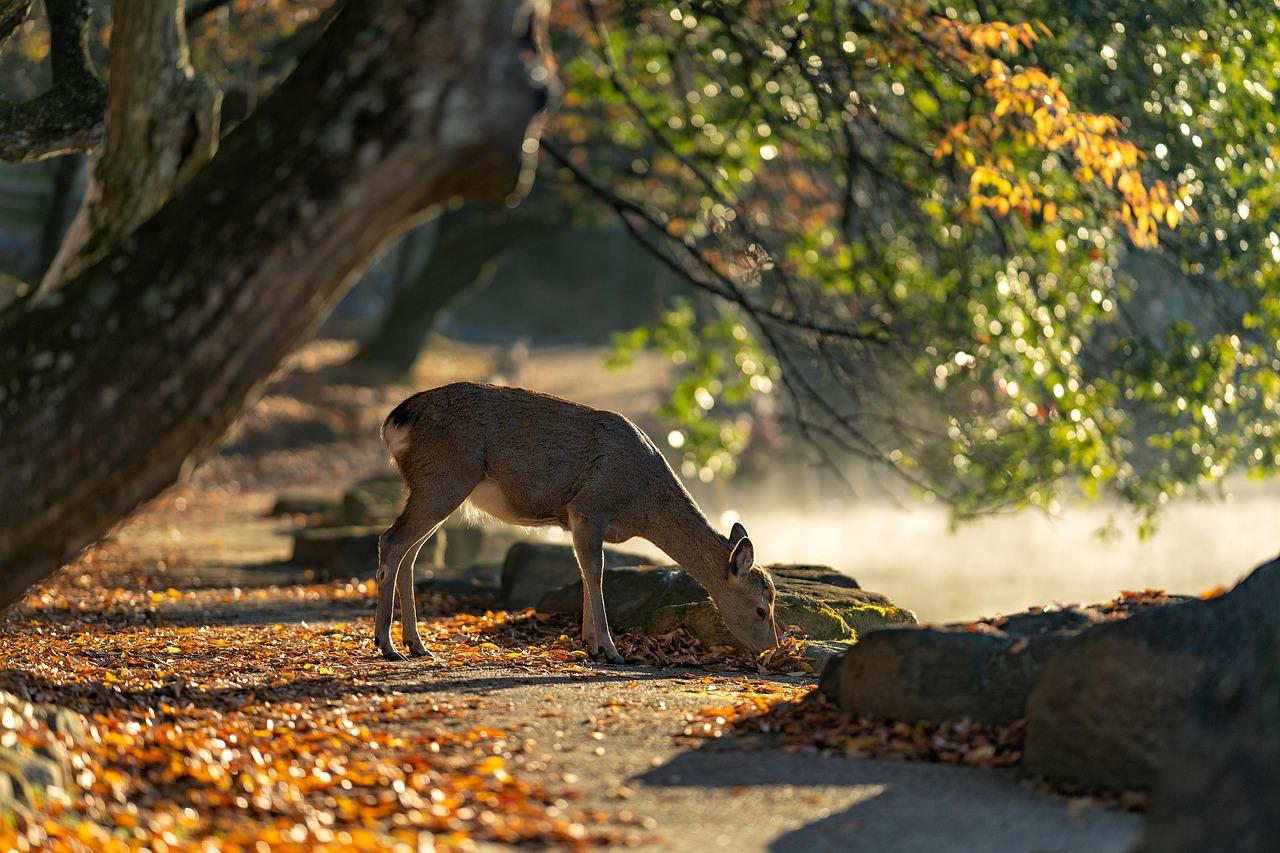
Nara's deer park is the other reason most people make the journey, and the central paths between Kintetsu Nara station, Todai-ji and the main deer-feeding areas are largely flat and paved or packed earth. For travellers who can walk 20 to 30 minutes at a gentle pace, the loop from the station to Todai-ji and back is very manageable.
Two things to bear in mind. First, the deer are free-roaming and will approach you, sometimes quite insistently, especially if you are carrying the deer crackers sold near the entrance. They are gentle animals but they can nudge and jostle; if you use a walking aid or feel unsteady on your feet, keep a companion close or move to the edge of the path. Second, the ground in the wilder sections of the park away from the main paths becomes uneven grass and earth, which is harder going — stick to the paved routes and you will find it much easier.
There are places to sit along the way, and a café near Nara Park is the easiest spot for a proper sit-down before you head back to the station.
Getting to Nara and around the town
Nara is usually reached from Kyoto (about 45 minutes on the Kintetsu Limited Express or the JR Nara Line) or from Osaka. Both Kintetsu Nara station and JR Nara station have lifts. The walk from Kintetsu Nara station to Todai-ji is roughly 20 minutes on flat, paved streets and park paths — manageable for most people who can walk that distance, and straightforward in a wheelchair.
From JR Nara station the walk is slightly longer (around 30 minutes). A taxi from either station to the Todai-ji gate cuts the walking distance considerably and drops you much closer; taxis queue outside both stations. If you use an electric wheelchair, our guide to accessible taxis in Japan explains which vehicle types to request.
The town centre between the two stations and the park is flat. The Naramachi historic district, slightly south, involves more uneven paving on older lanes — enjoyable at a slow stroll but harder for wheelchairs.
Nara with limited mobility
For travellers with limited mobility, Nara's strength is its concentration: the two main things — the deer and Todai-ji — are within a compact, largely flat area. The slope entrance and on-site wheelchair loans at Todai-ji mean you do not need to bring your own chair to visit the hall. The paved park paths are suitable for manual wheelchairs; powered chairs will manage them too, though gravel sections near the outer gate require care.
What is harder: the approach to Kasuga Taisha Grand Shrine, further into the park, involves a longer walk on less even ground and some steps at the shrine buildings — it is a beautiful spot but less straightforward for anyone with limited mobility. Nigatsu-do, a sub-temple of Todai-ji, is reached up a long flight of stone steps, so it is hard going. Our specialists advise that a Nara day built around Todai-ji and the deer park paths is a full, rewarding visit without those sites.
See our accessible holidays in Japan page for how we approach planning a trip around your needs.
Practical tips for a gentle Nara day
Arrive by mid-morning: the deer are most active before the heat of the day and before the main tourist groups arrive. Allow around two to three hours for a relaxed Todai-ji visit and a walk among the deer, with time to sit.
Wear flat, well-worn shoes with a grip — the gravel near the gate and the occasional uneven paving stone are easier with a proper sole. Carry water: the park has vending machines but fewer cafés between the gate and the hall.
Luggage forwarding (takkyubin) is worth considering if you are travelling between cities on the same day: Yamato's service sends bags ahead between hotels, usually next-day, so you travel to Nara with just a small bag rather than pulling a suitcase. Hotels arrange it at the front desk.
If you are combining Nara with Kyoto on a Japan Classic or Japan Grand Tour, it is worth placing Nara on an easier day rather than straight after a long travel day.
Facts checked by our Japan team on 19 November 2026.
