Accessible Holidays to Asia

Kyoto accessibility

Nijo Castle with limited mobility: an honest guide

You have wanted to see Nijo Castle for years — the golden screens, the nightingale floors, the garden — but you are not sure how much walking is involved or whether a walking stick or wheelchair will be a problem. The honest answer is that Nijo is very manageable for most visitors with limited mobility, as long as you know what to expect before you go.

The castle lends wheelchairs, has a ramp into the main palace and rest areas inside, and the subway station across the road has lifts. The gravel paths are the main challenge, and the loan chairs exist because of them. This guide covers each part so you can decide what to include and what to skip.

The short answer

Nijo Castle with limited mobility works well if you plan the route. The castle lends power-assisted wheelchairs free, a ramp leads into Ninomaru Palace, and the subway exit across the road has lifts. Most paths are gravel, and inside the palaces wheelchair users move into an indoor wheelchair. Ninomaru Palace and its garden take 1 to 1.5 hours.

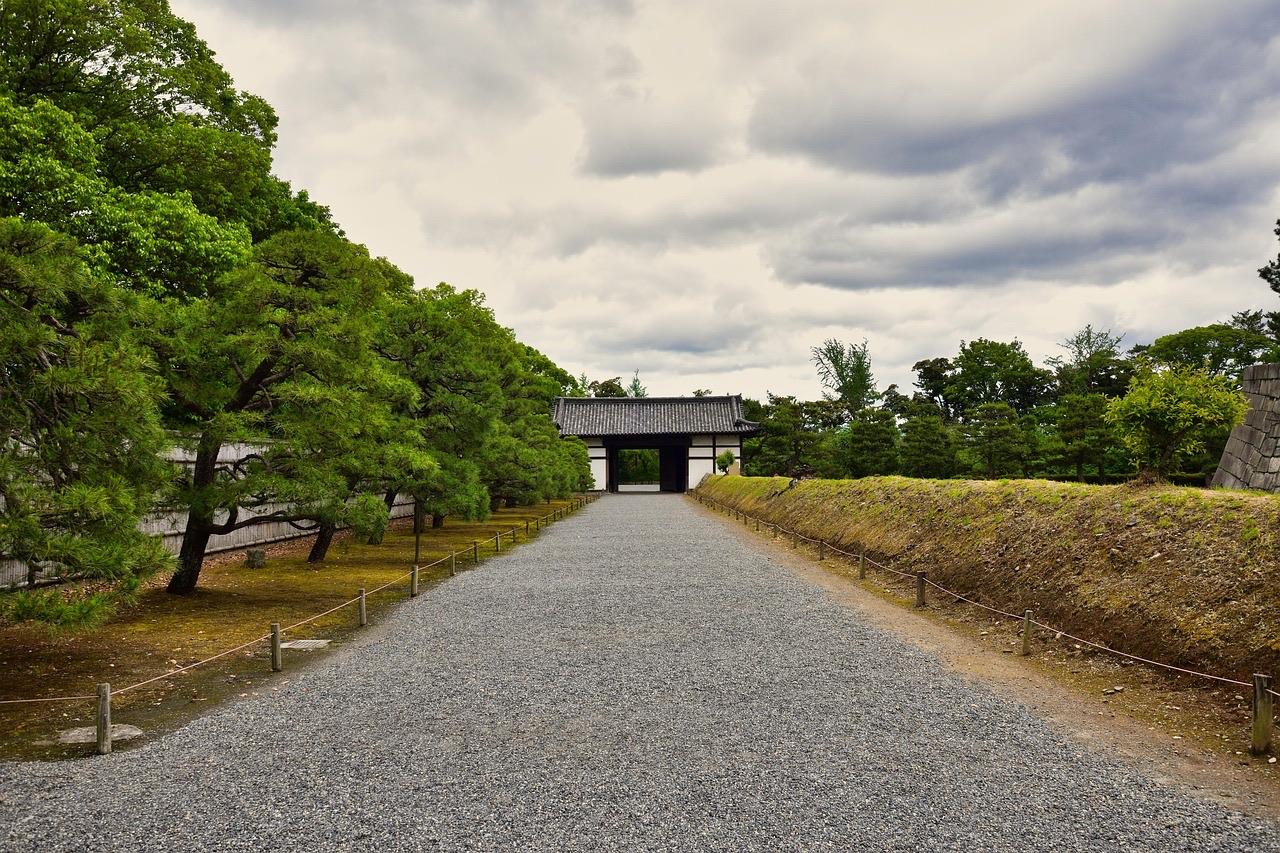
The wide gravel path to a gate inside Nijo Castle, Kyoto
Nijo Castle's wide gravel paths are the main challenge

Written & verified by

Anna Louise · Japan Travel Specialist

Getting to the castle

The easiest way to arrive is by subway. The castle is across the road from Exit 1 of Nijojo-mae Station on the Tozai line. That exit has a lift to the street and another down to the platforms, and there are accessible toilets near Exit 3.

Nijo Castle is on our Japan Highlights holiday. For more on getting around the city, see our guide to Kyoto in a wheelchair.

Wheelchair loans and what to expect at the gate

The General Information Desk lends power-assisted wheelchairs free of charge. Numbers are limited and you cannot reserve one, so arrive early if you need one. The power assist only works when a companion pushes, so you will need someone with you.

Once through the main gate, the character of the paths changes immediately. Most routes inside are gravel, which makes a manual wheelchair hard to push and a walking stick harder to use; powered wheelchairs can occasionally get stuck. The power-assisted loan chair is the practical choice for the gravel sections.

Ninomaru Palace: the ramp route

The highlight of a visit to Nijo is Ninomaru Palace, and wheelchair users can enter it. A ramp leads into the building, and the rooms and displays can be seen easily from a wheelchair. There are small bumps between some rooms that can jolt you if you are not watching, but none of them is a serious obstacle.

There is one important condition: wheelchair users must move into an indoor wheelchair provided by the castle, and staff may not allow entry to anyone who cannot make that transfer. The rooms, with their famous painted sliding screens, are well worth it.

Walking sticks and crutches are allowed in both palaces once the tip has been wiped clean. If your stick has a pointed tip, staff will lend you a replacement free of charge to protect the historic floors.

Honmaru Palace and the gardens

The Honmaru Palace is about 850 metres from the main Higashi Ote-mon entrance gate — roughly 15 to 20 minutes on foot — and requires an advance timed booking. Shoes come off inside and socks must be worn. If you are using a wheelchair, the entrance on the Honmaru area beside the Ninomaru Garden exit has a large step and a flight of stairs; instead, take the entrance on the far side of the moat, which has a gravel slope and no stairs. The old keep foundation beyond can only be reached by climbing and is not suitable for wheelchair users.

Accessible toilets are in the toilet blocks at the West Bridge Rest Area, the Seiryu-en Garden Rest Area and the east side of the Green Garden.

How long to allow

The Ninomaru Palace and Ninomaru Garden take 1 to 1.5 hours. Adding the Honmaru Garden and Honmaru Palace makes it 2.5 to 3 hours, depending on your walking speed. If you tire easily, the Ninomaru section alone is a complete visit.

The main rest area has a café, and the Waraku-an Tea House also serves tea and coffee. Seating in the main rest area is limited and cannot be reserved. For the wider picture, see our Japan over-70s accessibility guide.

Nijo Castle with limited mobility: the practical summary

Nijo Castle works well when you know the route. Take the subway to Nijojo-mae and use Exit 1; borrow a power-assisted wheelchair from the General Information Desk; follow the ramp into Ninomaru Palace and be ready to move into an indoor chair there; and for the Honmaru area use the entrance on the far side of the moat. The gravel is the main difficulty, and the loan chairs are there to help with it.

For more on travelling in Japan with a wheelchair or limited mobility, see our accessible Japan holidays page. Tell us your needs and we will check the details for your dates.

Facts checked by our Japan team on 23 November 2026.

Frequently asked questions

Can wheelchair users enter Ninomaru Palace at Nijo Castle?

Yes. A ramp leads into Ninomaru Palace and the rooms and displays can be seen easily from a wheelchair. You will need to move into an indoor wheelchair provided by the castle; staff may not allow entry to anyone who cannot make that transfer.

Does Nijo Castle lend wheelchairs?

Yes. The General Information Desk lends power-assisted wheelchairs free of charge. Numbers are limited and cannot be booked in advance, so arrive early. The power assist only works when a companion pushes. The castle provides separate indoor wheelchairs for use inside the palaces.

Are the paths at Nijo Castle suitable for wheelchairs?

Most paths inside the castle grounds are gravel, which makes a manual wheelchair hard to push and a walking stick harder to use. The castle lends power-assisted wheelchairs because of this. Exit 1 of Nijojo-mae Station, across the road, has a lift to the street.

Where are the accessible toilets at Nijo Castle?

Accessible toilets are in the toilet blocks at the West Bridge Rest Area, the Seiryu-en Garden Rest Area and the east side of the Green Garden. There are also accessible toilets near Exit 3 of Nijojo-mae Station, just across the road from the castle entrance.

How long does a visit to Nijo Castle take with limited mobility?

The Ninomaru Palace and Ninomaru Garden take 1 to 1.5 hours. Adding the Honmaru area makes it 2.5 to 3 hours, depending on your walking speed. If energy is limited, the Ninomaru section alone is a complete visit.

Is there somewhere to sit and rest inside Nijo Castle?

Yes. The main rest area has a café, and the Waraku-an Tea House serves tea and coffee. Seating in the main rest area is limited and cannot be reserved.

Start your accessible holiday

Tell us your dates and any access needs

No obligation and no pressure. Share as much or as little as you like about how you travel — we will come back with honest, specific answers and a plan shaped around you.

Fields marked * are required. We will never share your details with third parties for marketing purposes.

Ready when you are

Related holidays

Ready to start planning?

Tell us what you have in mind and we will send a sample itinerary and a full quote — no obligation. Plan now, travel in 2027.

Nijo Castle with limited mobility: an honest guide | Holidays to Asia