Accessible Holidays to Asia

Accessible Japan

Senso-ji temple in a wheelchair: an honest guide

You have seen the photographs of Senso-ji's great gate — the red lantern, the cloud of incense, the crowd pressing through. And then you wonder: will it actually work for me? Can I get to the main hall? Is it manageable?

The answer, for most visitors with limited mobility, is yes — with the right knowledge. Senso-ji has a lift built into the main hall, a ramp at the gate and loan wheelchairs available close by. The honest complication is Nakamise-dori, the shopping lane that leads to the temple: it is narrow, and on busy days it moves slowly. This guide tells you exactly what to expect, and when to go.

The short answer

Senso-ji in Asakusa is one of Japan's most wheelchair-accessible temples. The main hall has a built-in lift on its left side and a ramp, loan wheelchairs are available nearby, and the site is largely flat. The Nakamise shopping street leading to the gate is narrow and slow-moving in crowds; visit on a weekday morning for the calmest experience. Tell us your needs and we will check the details for your dates.

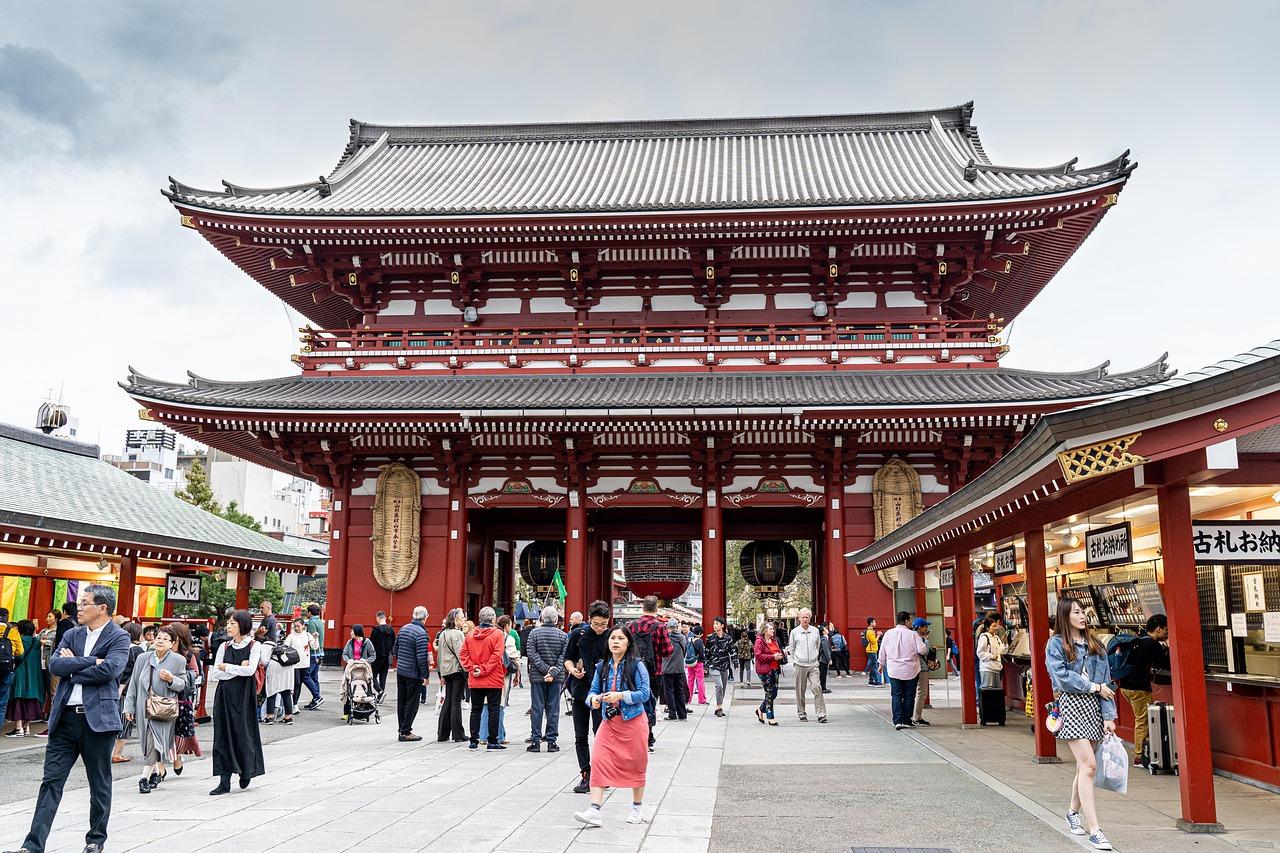
The main gate of Senso-ji temple in Asakusa, Tokyo
Senso-ji's Kaminarimon gate, Asakusa, Tokyo

Written & verified by

Anna Louise · Japan Travel Specialist

Getting to Senso-ji from Asakusa station

Asakusa has stations on several lines. If you are using the Ginza Line, be aware that the platform lift is on one side of the station only, so wheelchair users may need to change direction at another station to exit correctly — check the station map before you travel. The Toei Asakusa Line station and the Tsukuba Express station both have more straightforward lift access.

From the station exits it is a short, largely flat walk to the Kaminarimon gate. The area around Senso-ji is flat, which makes it one of the more manageable temple districts in Tokyo for anyone with limited mobility. Tokyo's Universal Design (UD) taxis — with ramps, handrails and sliding doors, charging the same fares as ordinary cabs — are a good option if the station-to-gate walk is too far; you can book one through the Uber Assist app in Tokyo's 23 wards. Allow an extra 10 to 15 minutes for the ramp to be set up. See our guide to accessible taxis in Japan for more detail.

Nakamise-dori: the narrow shopping street

Between the Kaminarimon gate and the inner Hozomon gate lies Nakamise-dori, a 250-metre shopping street lined with souvenir stalls. It is narrow, and on busy days the crowd moves slowly — a wheelchair user will need patience and a little space. Weekends are busier than weekdays, and the period from 1 to 15 January is the most crowded of the entire year.

The practical advice is to visit on a weekday morning, when the lane is calmer and the light is at its best. Early mornings also mean the temple itself is quieter. If the street feels too congested, side lanes run parallel to Nakamise and feed through to the inner courtyard.

The main hall: lift, ramp and what to expect

Senso-ji's main hall has a lift built into its left side, clearly signposted with the wheelchair symbol, plus a ramp. This makes the main hall itself one of the more reliably accessible large temple buildings in Japan.

Some of the smaller halls within the complex — including Bentendo — have stairs only and no step-free alternative. Our specialists advise focusing on the main hall and the outer courtyard, which are well worth the visit on their own. The inner courtyard is largely level, giving good views of the five-storey pagoda and the incense urn where visitors wave smoke towards themselves for good luck.

Senso-ji with limited mobility

Senso-ji is one of Tokyo's gentler sights for visitors with limited mobility. The main hall is reached by a lift or ramp, the outer courtyard is flat, and the site is compact enough that you are not covering large distances. Loan wheelchairs are available from the information centre at the Asakusa Tourist Information Centre nearby — these cannot be reserved in advance, so arrive early if you need one.

If walking is tiring but you do not need a wheelchair, the route from the gate to the main hall and back is comfortably under 500 metres. There are benches in the outer courtyard where you can sit and take in the scene. Multipurpose accessible toilets are available at the site. For those who find public transport tiring, a Universal Design taxi door-to-door is the simplest approach. See our guide to accessible holidays to Asia for broader planning advice.

Honestly, the main challenge is the crowd in Nakamise-dori rather than the temple itself. A weekday morning visit avoids the worst of it.

Senso-ji and the Japan tours we sell

Senso-ji in Asakusa features in several of our Japan itineraries. The Japan Classic 14-day tour includes Tokyo days with time for Asakusa; the Japan Grand Tour 18-day gives more time in the capital. If you are planning a visit around your mobility needs, check station access, taxi options and the quietest times for your dates before you go.

Every holiday we sell is private and tailor-made, so the day can be paced to suit you. Our Japan highlights 9-day tour is a shorter option if you want to see Tokyo and Kyoto without a long itinerary. Tell us your dates and we will price it for you.

Video

Watch the short video

Kyoto in a wheelchair: which sights work and how to get to them

Facts checked by our Japan team on 19 November 2026.

Frequently asked questions

Is Senso-ji accessible for wheelchair users?

The main hall at Senso-ji has a lift on its left side, clearly marked with the wheelchair symbol, plus a ramp. The outer courtyard is largely flat. Some smaller halls, including Bentendo, have stairs only. The main challenge for wheelchair users is the narrow Nakamise shopping street, which is slow-moving in crowds; a weekday morning visit is calmer.

Are there loan wheelchairs at Senso-ji?

Loan wheelchairs are available from the Asakusa Tourist Information Centre near the temple. They cannot be reserved in advance, so arriving early is advisable. If you need a wheelchair for the whole day, our specialists advise arranging your own or booking one ahead — wheelchair rental in Japan requires advance notice, with some suppliers needing up to two weeks.

What is the best time to visit Senso-ji with limited mobility?

A weekday morning is the calmest time. Nakamise-dori, the shopping street leading to the gate, is narrow and slow-moving when busy; weekends are busier, and 1 to 15 January is the most crowded period of the year. Arriving early also means the outer courtyard and incense urn are quieter.

How do I get to Senso-ji from the Ginza Line at Asakusa station?

At Asakusa station on the Ginza Line, the platform lift is on one side only, so wheelchair users may need to switch direction at another station. The Toei Asakusa Line and Tsukuba Express stations at Asakusa have more straightforward lift access. Alternatively, a Universal Design taxi from your hotel to the Kaminarimon gate avoids the station entirely.

Can I visit Senso-ji with bad knees?

Yes — Senso-ji is one of Tokyo's more manageable temples for visitors with bad knees. The route from the gate to the main hall is flat and under 500 metres. The main hall has a ramp as well as a lift. There are benches in the outer courtyard to rest on. The only awkward section is the narrow Nakamise shopping street in crowds; visit on a weekday morning to avoid the worst of it.

Do the Japan tours include a visit to Senso-ji?

Several of our Japan itineraries include Tokyo days with time for Asakusa and Senso-ji, including the Japan Classic 14-day and the Japan Grand Tour 18-day.

Start your accessible holiday

Tell us your dates and any access needs

No obligation and no pressure. Share as much or as little as you like about how you travel — we will come back with honest, specific answers and a plan shaped around you.

Fields marked * are required. We will never share your details with third parties for marketing purposes.

Ready when you are

Related holidays

Ready to start planning?

Tell us what you have in mind and we will send a sample itinerary and a full quote — no obligation. Plan now, travel in 2027.

Senso-ji temple in a wheelchair: an honest guide | Holidays to Asia