The route at a glance
Seoul for three nights, Gyeongju for three, Busan for two, then one last night in Seoul before the flight home. That is nine nights on the ground and ten days in all.
The KTX high-speed train does the long legs: Seoul to Gyeongju in about two hours, and Busan back to Seoul in under three. Gyeongju to Busan is a short drive. You are met at the airport, and a private car and your own guide are with you on the sightseeing days.
Our South Korea in blossom and autumn colour tour follows this ten-day plan, and the South Korea Classic is the same route in nine days.
Days 1 to 3: Seoul
Day 1 is the arrival. The direct flight from London takes about 13 hours, so nothing is planned beyond the transfer to your hotel and an early night.
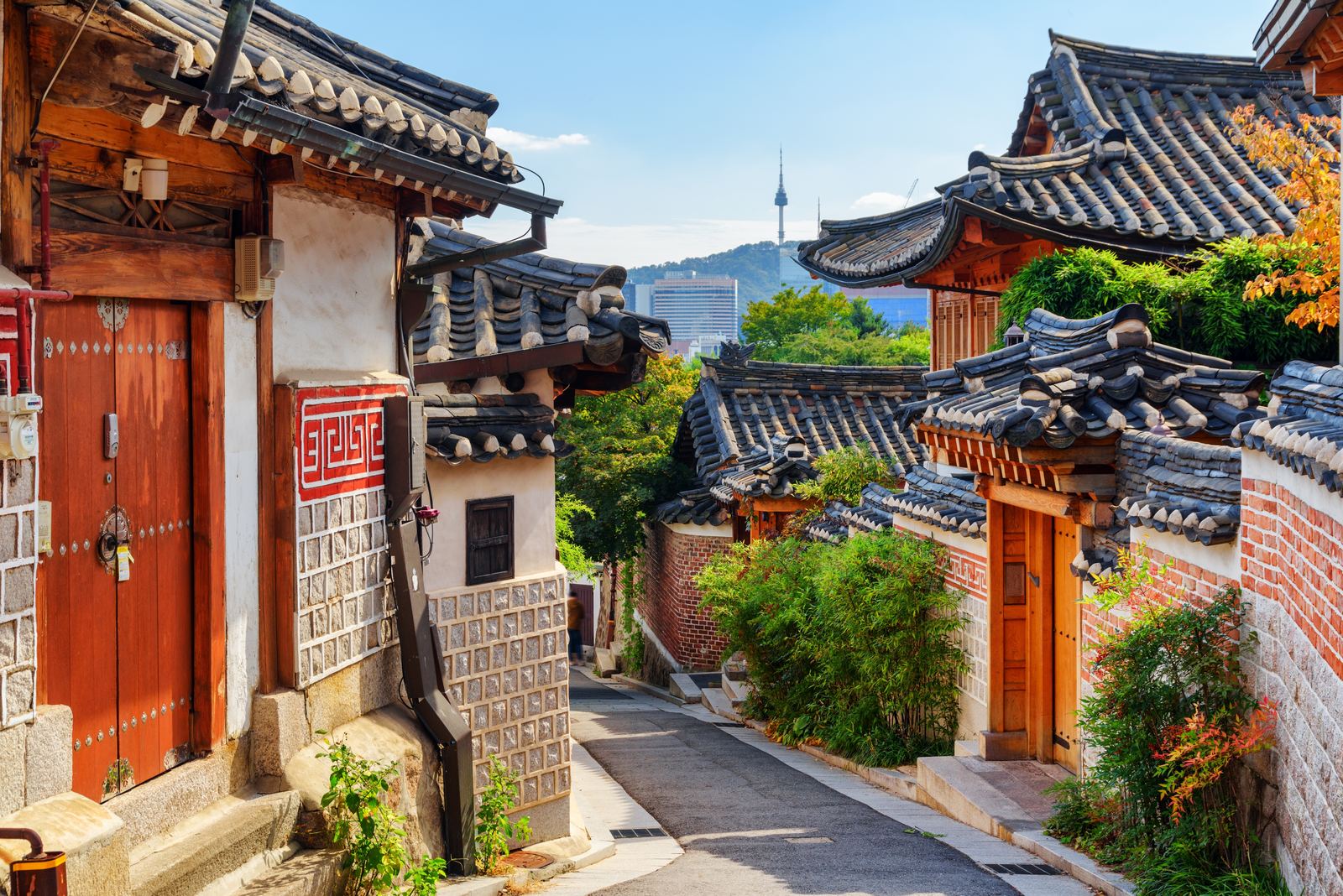
Day 2 is for the royal city. Gyeongbokgung is the largest of the palaces, and the changing of the guard at its main gate is worth timing your arrival for. From there it is a short drive to Bukchon, a hillside quarter of traditional tiled houses, and to the tea houses and craft shops of Insadong. Expect to walk about four kilometres over the day, mostly on the flat, with gentle slopes in Bukchon.
Day 3 can go two ways. Many people take the day trip to the Demilitarised Zone, the border that has divided the peninsula since 1953. Others would rather have a second, slower day in Seoul: Changdeokgung Palace and its garden, a market, or the city museum.
Days 4 to 6: Gyeongju
On day 4 the KTX takes you south to Gyeongju in about two hours. Gyeongju was the capital of the Silla kingdom for nearly a thousand years, and the grass-covered burial mounds of its kings still rise in the middle of the town. The afternoon is for the mounds at Daereungwon and the royal pond nearby.
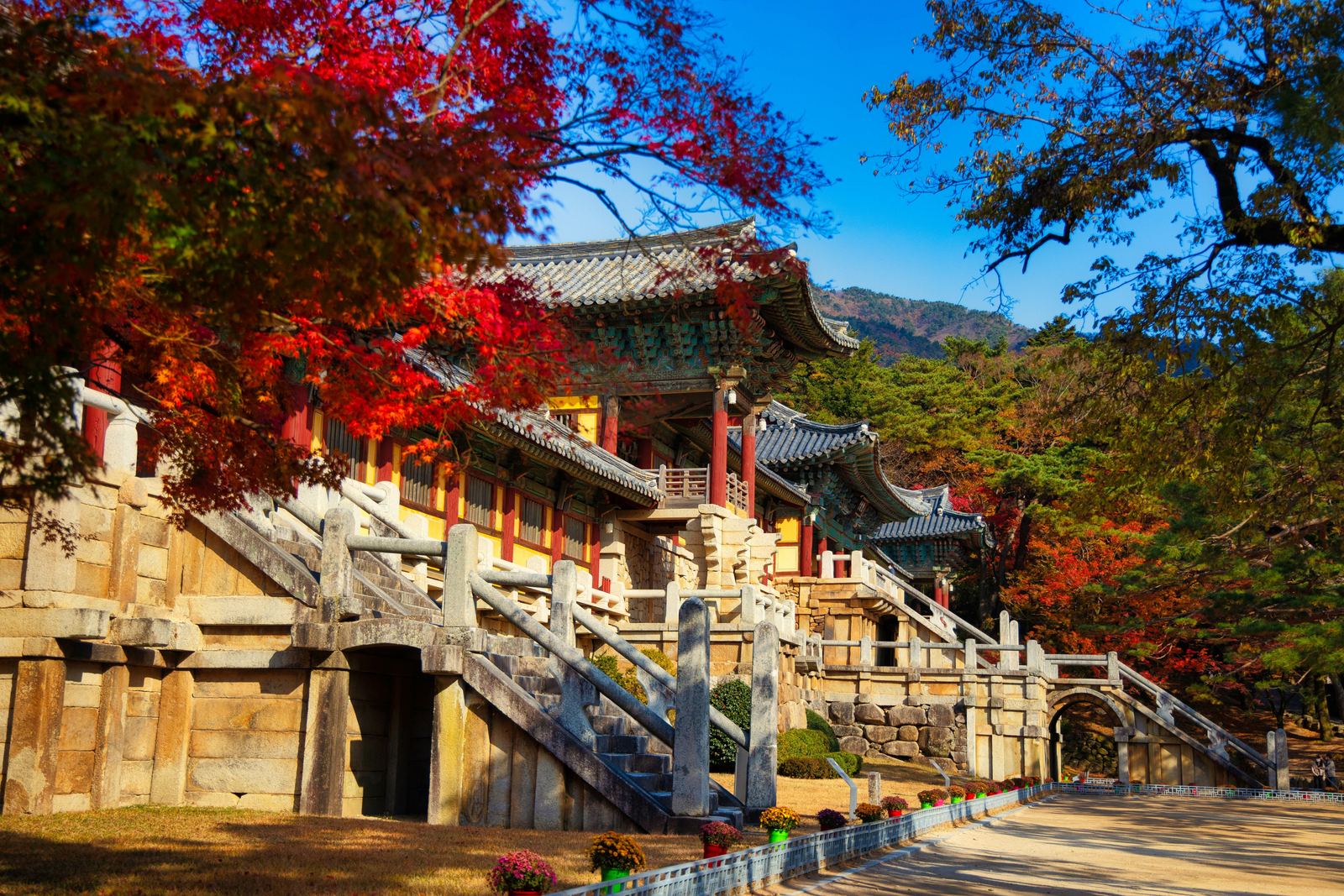
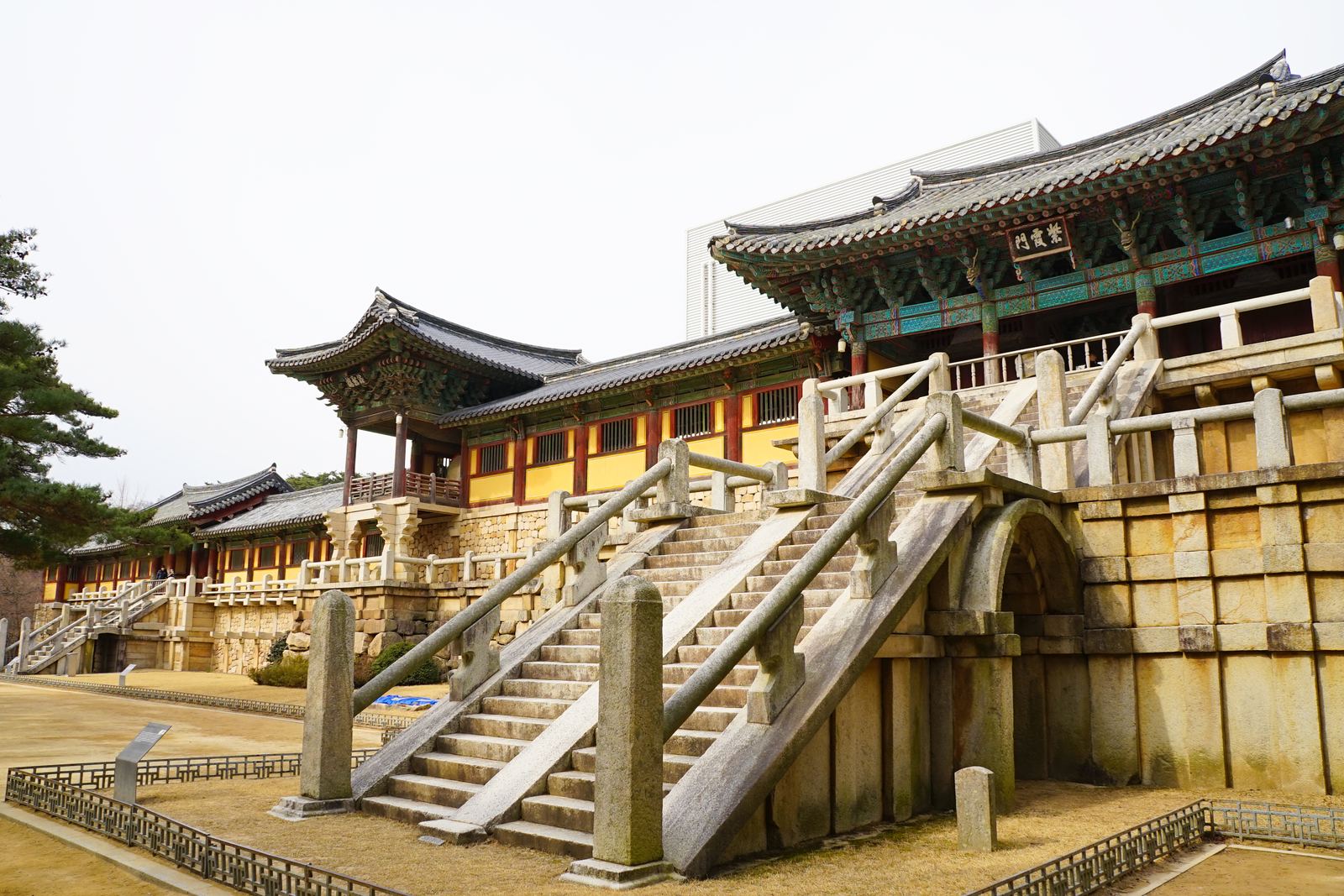
Day 5 is the main day: Bulguksa Temple, built in the eighth century, and the Seokguram Grotto above it, with its seated stone Buddha. Both are UNESCO World Heritage Sites. Bulguksa has stone stairways and terraces, so this is the day with the most steps, and your guide can show you the level routes round the main courtyards.
Day 6 is the spare day, and it is what makes ten days better than nine. In early April it becomes a day among the cherry blossom at Jinhae. In late October or early November it can be a day in the hills for the autumn colour. At other times it is a free day in Gyeongju, for the National Museum or simply a rest.
Days 7 and 8: Busan
A short drive on day 7 brings you to Busan, the country's second city and its main port. The afternoon is for the sea front at Haeundae, which is flat and paved.
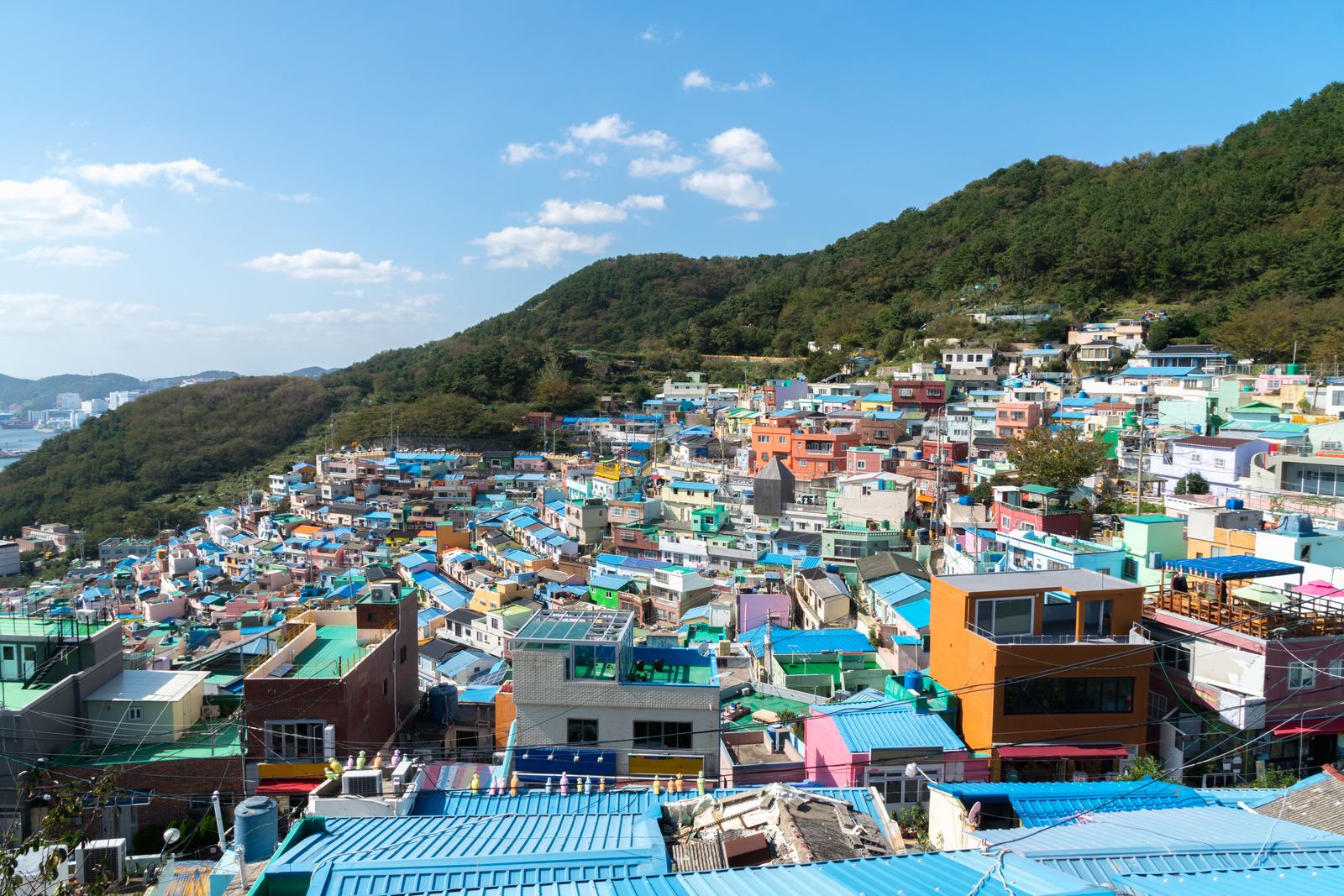
Day 8 covers the city. Gamcheon Culture Village is a hillside of brightly painted houses; it is steep in places, so we keep to the upper lanes and the viewpoints. Jagalchi is the country's best-known fish market. Many people also visit Haedong Yonggungsa, a temple built on the rocks above the sea, which is reached by a long flight of steps; there is a viewpoint for those who would rather not go down.
Days 9 and 10: back to Seoul, and home
On day 9 the KTX returns you to Seoul in under three hours, with the afternoon free for last shopping or a walk along the Cheonggyecheon stream. Day 10 is the transfer to the airport.
Ending in Seoul keeps the last day simple, because the direct flights to London leave from there.
How much walking it involves
On our day plans the sightseeing days come to between three and four and a half kilometres on foot, spread over the day, and the travel days to about two. The palaces and the Busan sea front are flat. The steps are at Bulguksa, Seokguram and Haedong Yonggungsa, and the slopes are in Bukchon and Gamcheon.
Because the car is with you, the walking can be cut down a good deal. If you walk but not far, see our guide to South Korea for the over-70s, which goes through the sights one by one.
When to go, and ways to change it
April, May, October and early November are the best months for this route; our guide to the best time to visit South Korea has the detail, including the two holiday weeks to avoid.
With only a week, keep Seoul and Gyeongju and leave Busan for another time, as our South Korea in a week tour does. With a fortnight, add Jeju Island: see two weeks in South Korea. And if you would like to see Japan on the same holiday, Busan is about an hour and a half by air from Osaka: see Japan and South Korea in one holiday.
Travelling on your own? The same route runs as a private holiday for one, and our singles guide to South Korea explains how the rooms and costs work.
Facts checked by our South Korea team on 23 November 2026.
