The route at a glance
Seoul for three nights, Andong for one, Gyeongju for two, Busan for two, Jeonju for one, and Jeju Island for four. That is thirteen nights and fourteen days.
You travel by high-speed train and private car on the mainland, and take one short internal flight to Jeju. Our South Korea Complete tour follows this plan.
Days 1 to 3: Seoul
Day 1 is the arrival, after a direct flight of about 13 hours from London, and nothing more is planned.
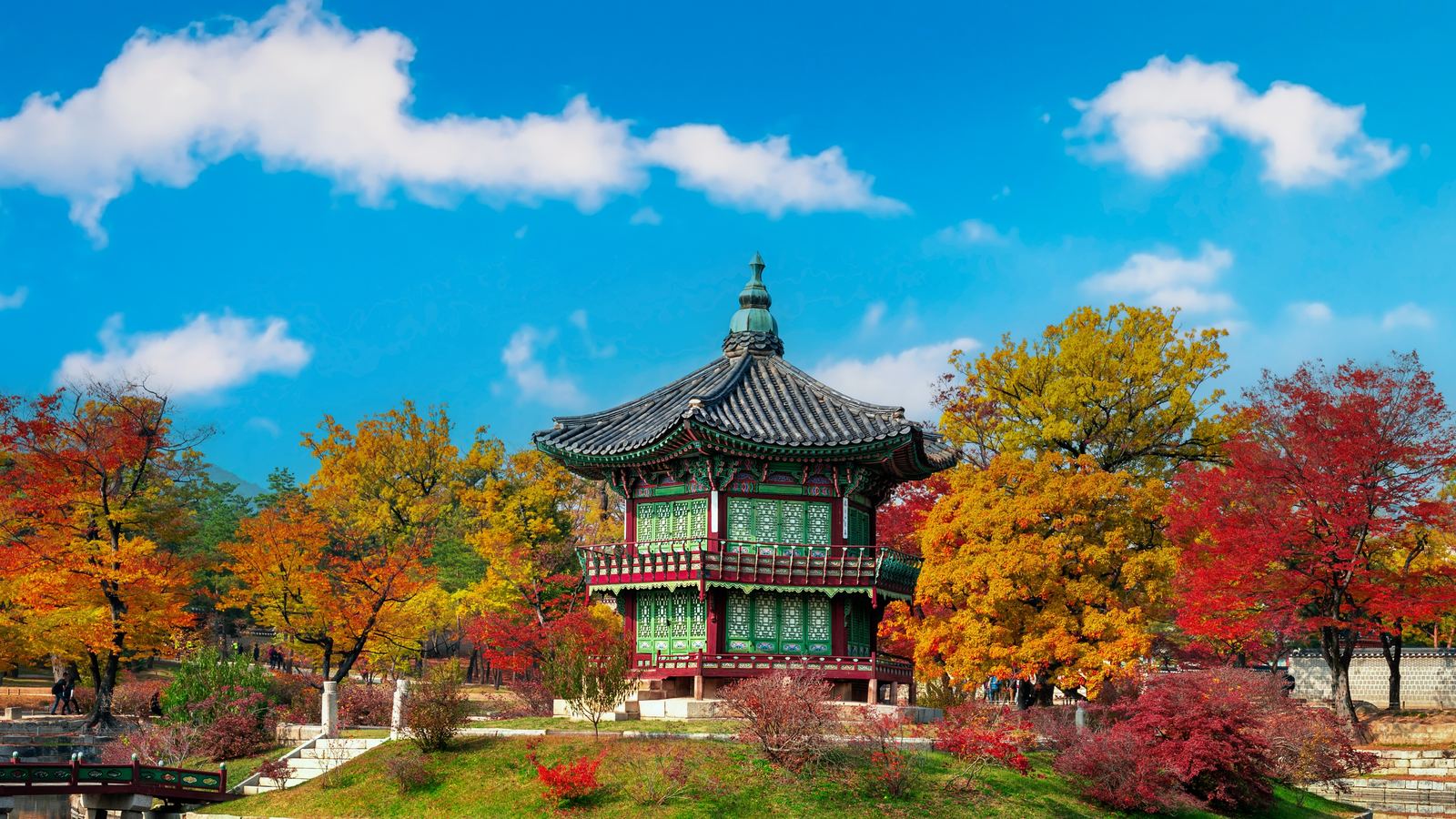
Day 2 is for old Seoul: Gyeongbokgung Palace in time for the changing of the guard, then the lanes of Bukchon Hanok Village. Day 3 is a morning at the Demilitarised Zone, the border that has divided the peninsula since 1953, with the afternoon free.
Days 4 to 6: Andong and Gyeongju
On day 4 you leave the capital by train and car for Andong and the Hahoe Folk Village, a UNESCO World Heritage Site in a bend of the river, where families still live in tiled and thatched houses several centuries old.
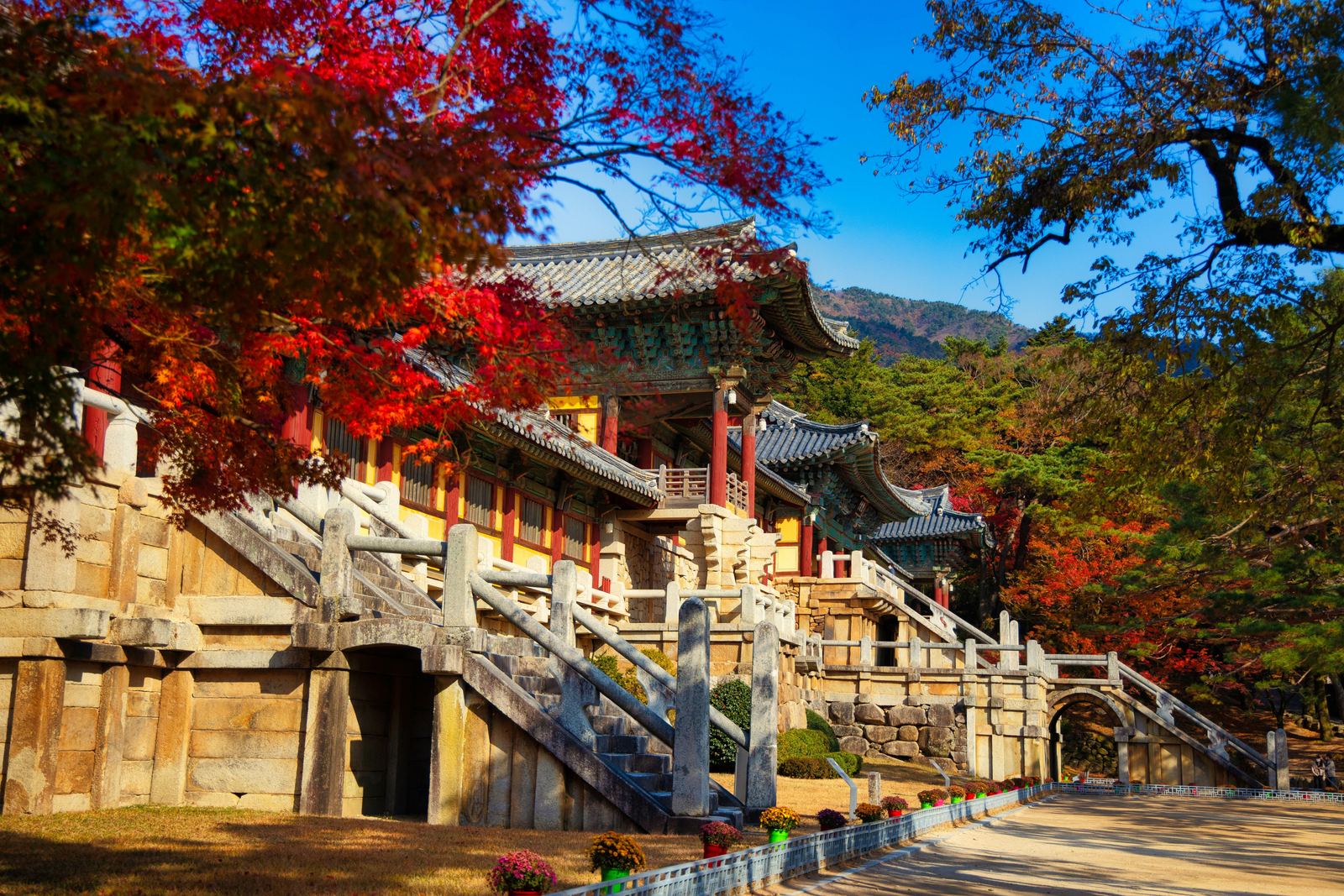
A short drive on day 5 brings you to Gyeongju, the capital of the Silla kingdom for nearly a thousand years. The afternoon is for the royal burial mounds at Daereungwon. Day 6 is Bulguksa Temple and the Seokguram Grotto, both from the eighth century and both World Heritage Sites. This is the day with the most steps.
Days 7 to 9: Busan and Jeonju
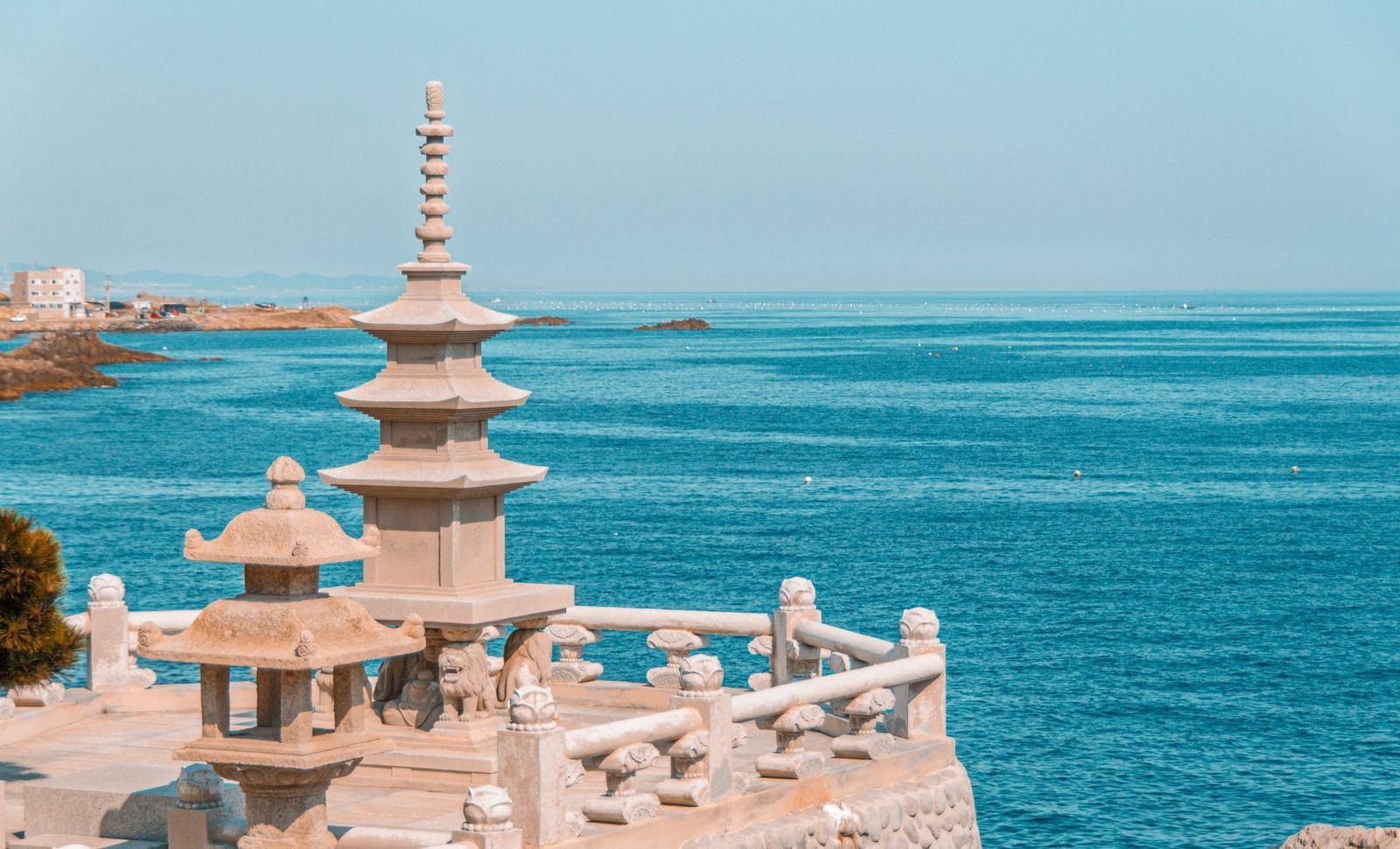
Day 7 takes you to Busan, with a stop at Haedong Yonggungsa, a temple on the rocks above the sea. Day 8 is the city itself: the painted hillside of Gamcheon Culture Village, the Jagalchi fish market and the sea front at Haeundae.
On day 9 you cross the country to Jeonju. It has one of the largest hanok villages in Korea, several hundred traditional houses in the middle of the town, and it is known across the country for its food. Bibimbap, the rice dish now served everywhere, is the dish Jeonju is best known for.
Days 10 to 14: Jeju Island
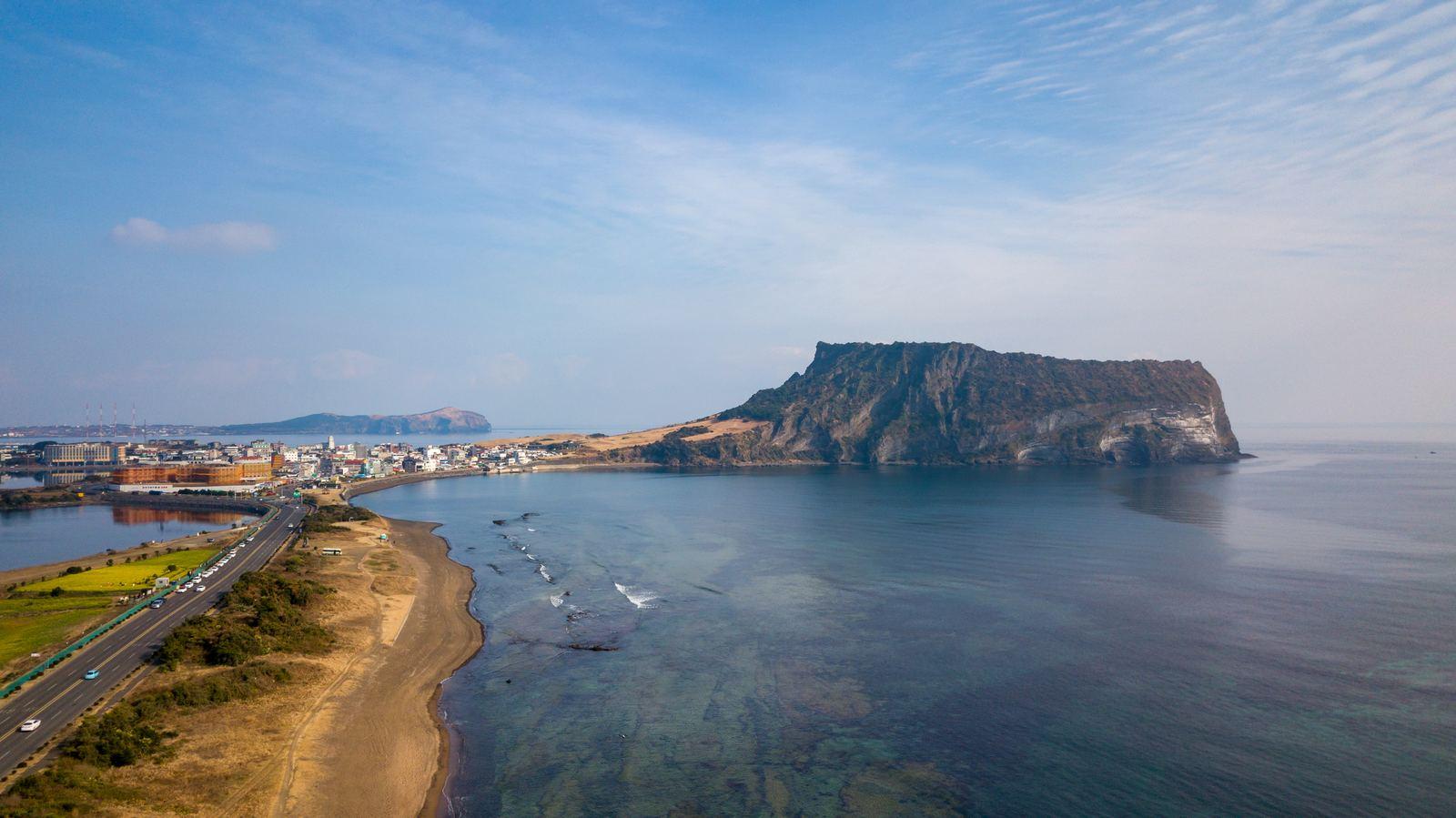
A short flight on day 10 takes you to Jeju, the volcanic island off the south coast where Koreans themselves go on holiday. The rest of the day is free.
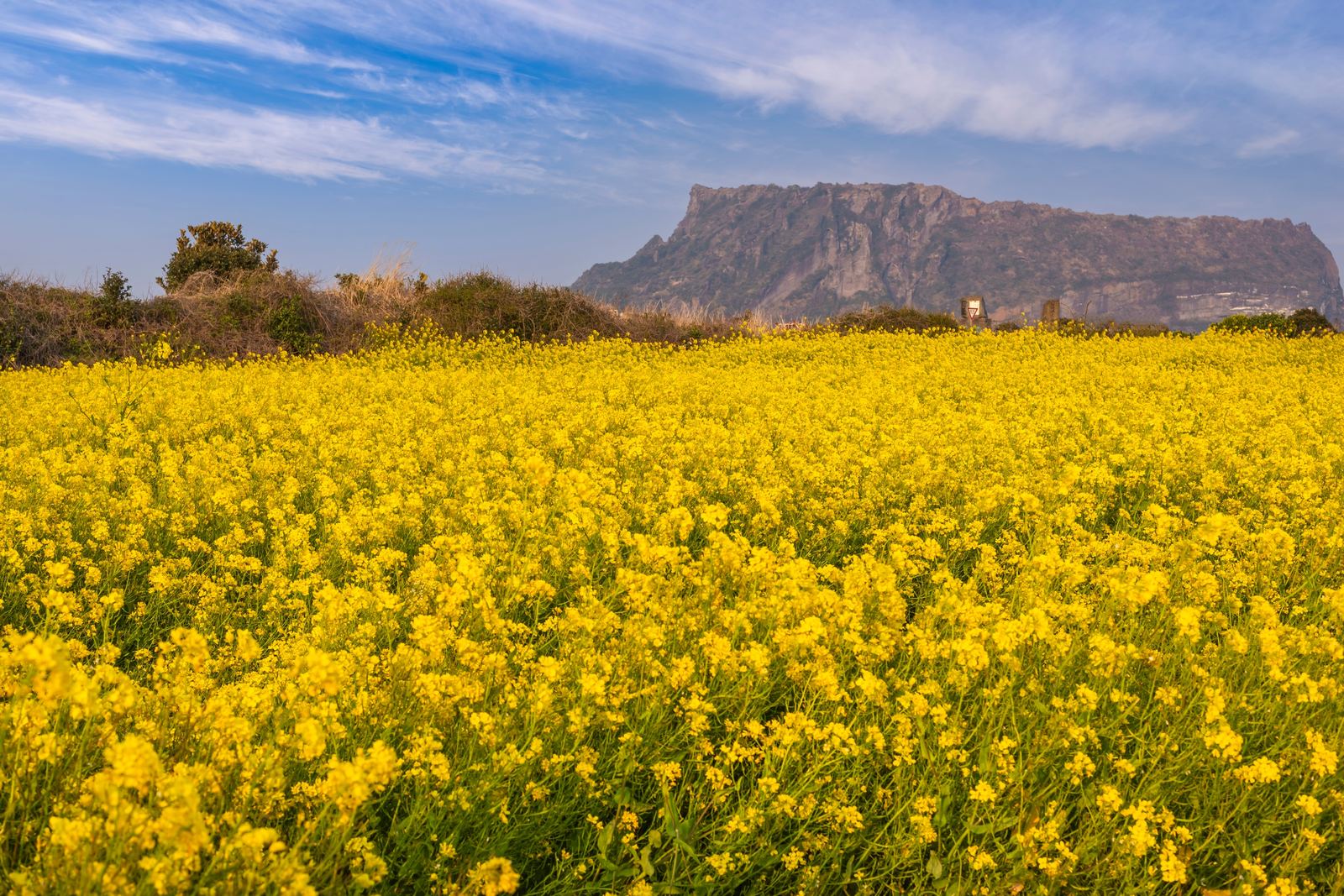
Day 11 is the east of the island and Seongsan Ilchulbong, a volcanic cone that rises straight out of the sea and is part of a UNESCO World Heritage Site. The path to the rim is a steady climb on a stairway; the view of the cone from the shore below needs no climbing at all. Day 12 is the forested foothills of Hallasan, the mountain at the centre of the island, and the south coast.
Day 13 is free, for the hotel, the coast paths or a garden. On day 14 you fly home, usually with a change in Seoul.
How much walking it involves
On our day plans the sightseeing days come to between three and four and a half kilometres on foot, and the travel days to less. The longest climbs are optional: the stairway up Seongsan Ilchulbong, and the steps at Bulguksa and Haedong Yonggungsa, all of which have viewpoints for those who would rather stay on the level.
The four nights on Jeju at the end are deliberate. After nine days of moving every night or two, they give you a proper rest before the flight home. If you walk but not far, our guide to South Korea for the over-70s covers the main sights one by one.
When to go, and ways to change it
April, May, October and early November suit the whole route. Jeju is milder than the mainland in winter and wetter in summer. Our guide to the best time to visit South Korea goes through the year month by month.
If two weeks is too long, the ten-day itinerary keeps Seoul, Gyeongju and Busan. If you would rather spend the second week in another country, Japan and South Korea in one holiday swaps Jeju and Jeonju for Kyoto and Tokyo.
Facts checked by our South Korea team on 23 November 2026.
