Why accessible rooms in Japan book out fast
Japan's hotels are becoming more accessible, but adapted rooms are still limited. A Tokyo ordinance requires ordinary guest rooms in hotels of 1,000 square metres or more that are new or recently renovated to have doors wider than 80 cm. Older hotels, however, may have only one or two rooms that meet an accessible standard, so they can go early.
Book an accessible room as early as you can. If your travel dates are flexible, avoid cherry blossom season (late March to mid-April) and autumn colour season (roughly November to early December in Tokyo and Kyoto), when every room category fills quickly.
Contact the hotel directly and ask for the specific features in writing: door width, bathroom layout, grab rails, and whether the accessible room has a roll-in shower or a step-into bath.
Roll-in showers: honest advice
Roll-in showers are much less common in Japanese hotels than in the UK or the United States. What many hotels describe as an accessible bathroom often has a floor drain beside the bath, so a carer or the guest washes at a shower seat next to the bath rather than rolling into an enclosed cubicle. This arrangement works well for some guests and not at all for others.
Before you book, ask the hotel these questions directly: Is there a roll-in shower with no lip or step? What is the width of the bathroom door? Is there a shower seat fixed to the wall or supplied on request? Are grab rails fitted beside the toilet and shower? If the hotel cannot answer clearly, that itself tells you something.
Specialist accessible-travel resources note that those who need a true roll-in shower should check each property individually and book early, because hotels with that feature are genuinely in the minority.
City hotels versus traditional ryokan
Newer city hotels are usually the easier choice for wheelchair users: in Tokyo, new and renovated hotels above a certain size must have the wider doors described above. Even so, roll-in showers are rare and the number of fully adapted rooms per property is often small.
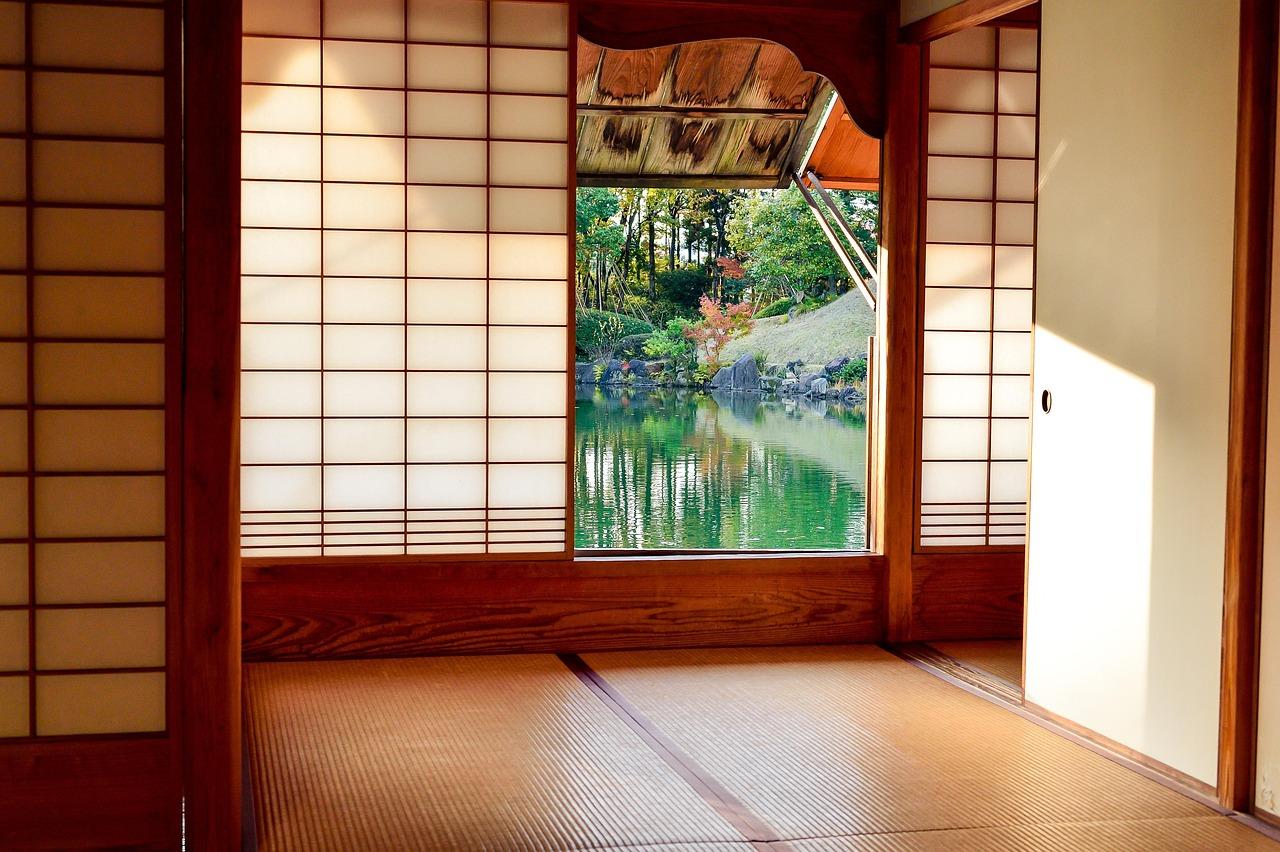
Traditional ryokan are a different matter. The classic ryokan experience involves tatami-mat floors, futon bedding laid out at floor level, sliding paper doors, and communal bathing. For guests with limited mobility or a wheelchair, that combination can be difficult. The good news is that the picture is changing: more ryokan now offer rooms with beds, including Japanese-style rooms fitted with beds, and fully Western rooms. The Japan Tourism Agency advises guests to tell the ryokan their needs beforehand, and simply asking is often enough to have a Western table and chairs brought to the room.
Some ryokan have been renovated to universal design principles, adding lifts, handrails, ramps, chairs and benches. These properties exist but are not universal, so they need to be identified in advance. If a ryokan night is part of your Japan holiday, ask the ryokan to confirm the adaptations you need before you book. You can read more about ryokan stays in our guide to Japan ryokan with limited mobility.
Private hot-spring baths for guests who need them
One of Japan's great pleasures is the onsen, the hot-spring bath. Communal onsen — large shared baths, usually separated by gender — can be hard to manage for guests with limited mobility, and are not always accessible. The practical alternative is a private hot-spring bath, known as kashikiri.
Many onsen properties offer kashikiri baths that you can reserve for your own group, either in advance or at the front desk on arrival. They almost always cost extra, but they give you the full onsen experience in a space you control, at a time that suits you. If a private bath matters to you, ask about it when you book.
For guests who use a wheelchair, check whether the route to the private bath is step-free and whether the bath itself can be entered without steps. This varies by property and should be confirmed directly before booking.
Accessible hotels in Japan with limited mobility
If you walk but find stairs painful or tire quickly, the hotel features that matter most are: a lift to every floor, a walk-in shower or a bath with grab rails, a room on a low floor if the lift is unreliable, and a lobby with seating so you can rest on arrival. Confirm each of these with the hotel rather than assuming them from its star rating.
Public benches are uncommon in Tokyo, so cafés, convenience stores and your hotel lobby are where you sit and rest during the day. A hotel close to the sights you most want to see means shorter trips back for a rest. For a fuller picture of gentle-pace travel in Japan, our Japan over-70s guide covers pacing, rest days and what the main sights actually involve on the ground.
For the wider picture, see accessible holidays in Japan.
What to ask before you confirm any hotel in Japan
Whether you are booking through us or independently, these are the questions that matter: What is the door width of the accessible room? Is the bathroom a roll-in shower, a step-in shower, or a bath? Are grab rails fitted? Is the route from the entrance to the room step-free? Is there a lift, and can a standard manual or power wheelchair use it? If the hotel has an onsen, is there a private bath, and is the route to it step-free?
In writing is better than a phone call. Ask for the answers by email or through the booking platform's message system, so you have a record. If the hotel is uncertain or cannot confirm a feature, treat that as a no for planning purposes.
For the Japan tours we sell — including the Japan Classic 14-day, the Japan Highlights 9-day and the Japan Grand Tour 18-day — tell us your needs and we will check the details for your dates.
Video
Watch the short video
Facts checked by our Japan team on 20 November 2026.
