The short answer
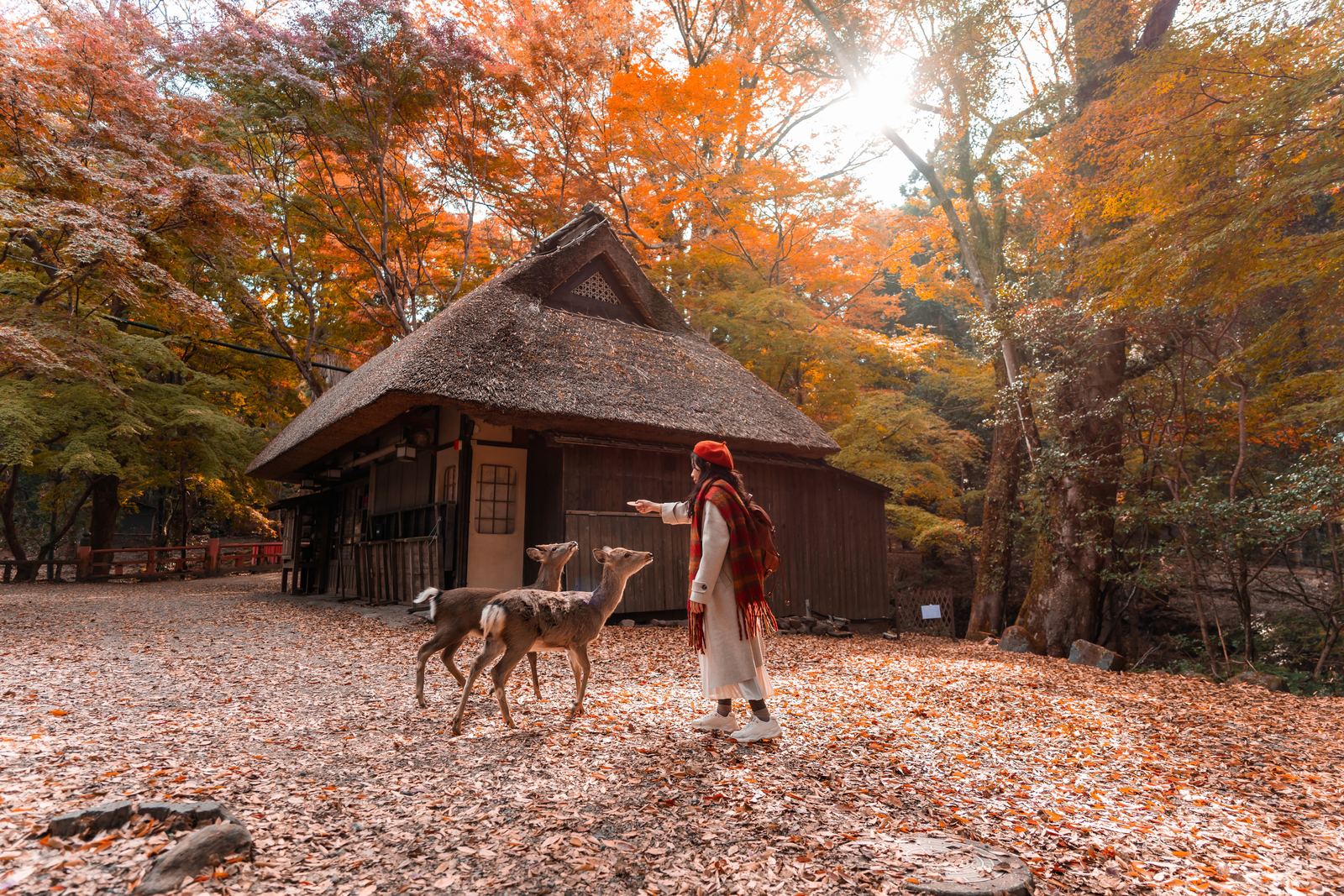
Go in April, May, October or November. In those four months the average temperature in Seoul, Busan, Kyoto and Tokyo sits between about 8°C and 20°C across day and night, which is comfortable for days spent in palaces, temples and gardens.
For blossom, choose the last days of March and the first half of April, starting in Japan. For clear days and autumn colour, choose November, starting in South Korea. May is the quieter choice: warm and green, once Japan's holiday week at the start of the month has passed.
Spring: late March to May
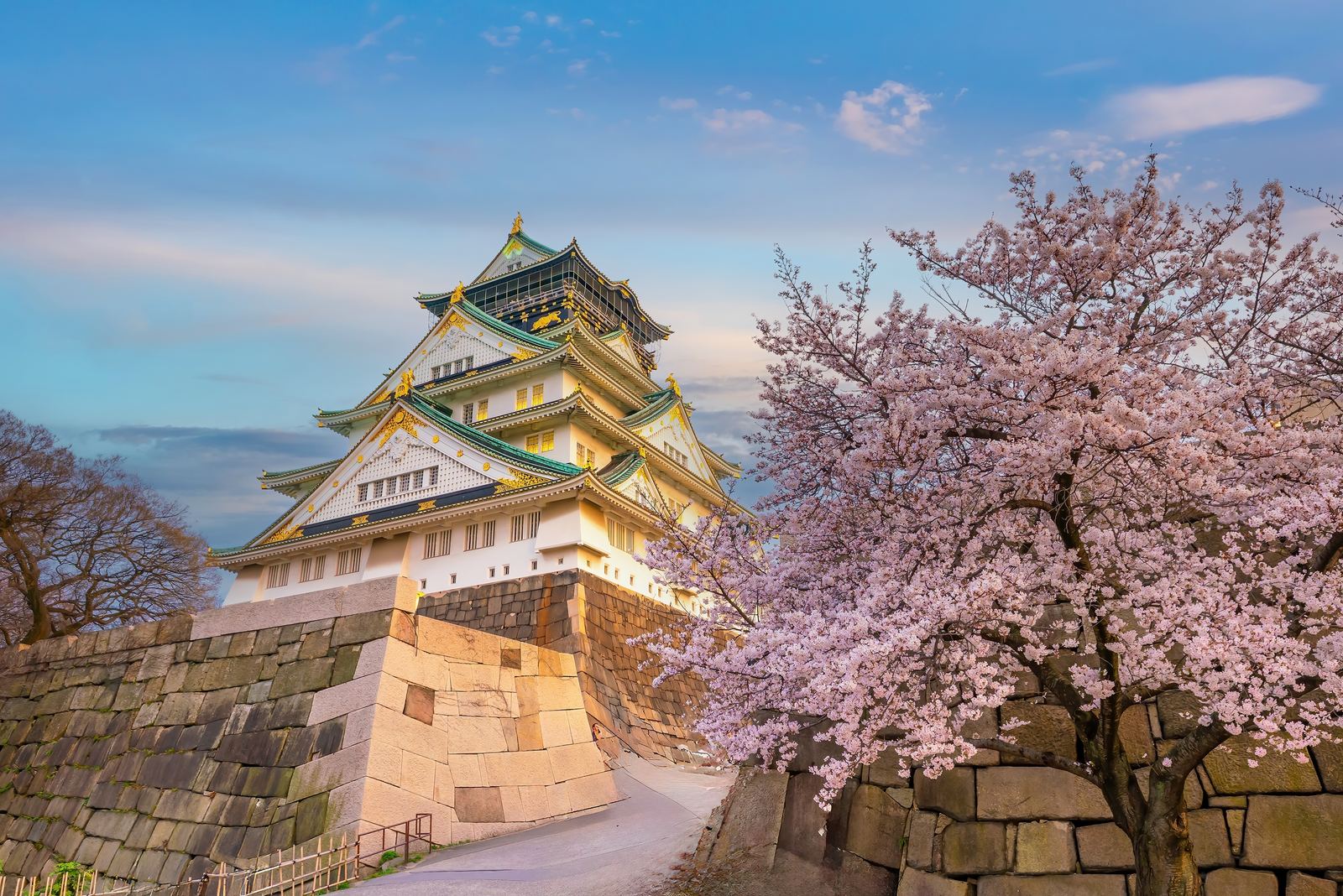
Spring comes to Japan first. On long-term averages the cherry blossom is in full bloom in Tokyo around 31 March and in Kyoto around 4 April, and reaches Seoul around 10 April. So in spring the right order is Japan first: our guide to Japan and South Korea in cherry blossom season has a route built on those dates.
Temperatures climb quickly. Seoul averages about 6°C in March, 13°C in April and 18°C in May. Tokyo and Kyoto average about 9°C, 14°C and 19°C.
The week to avoid is 29 April to 5 May in Japan, a run of public holidays known as Golden Week, when the Japanese themselves travel and trains and hotels are full.
Autumn: October and November
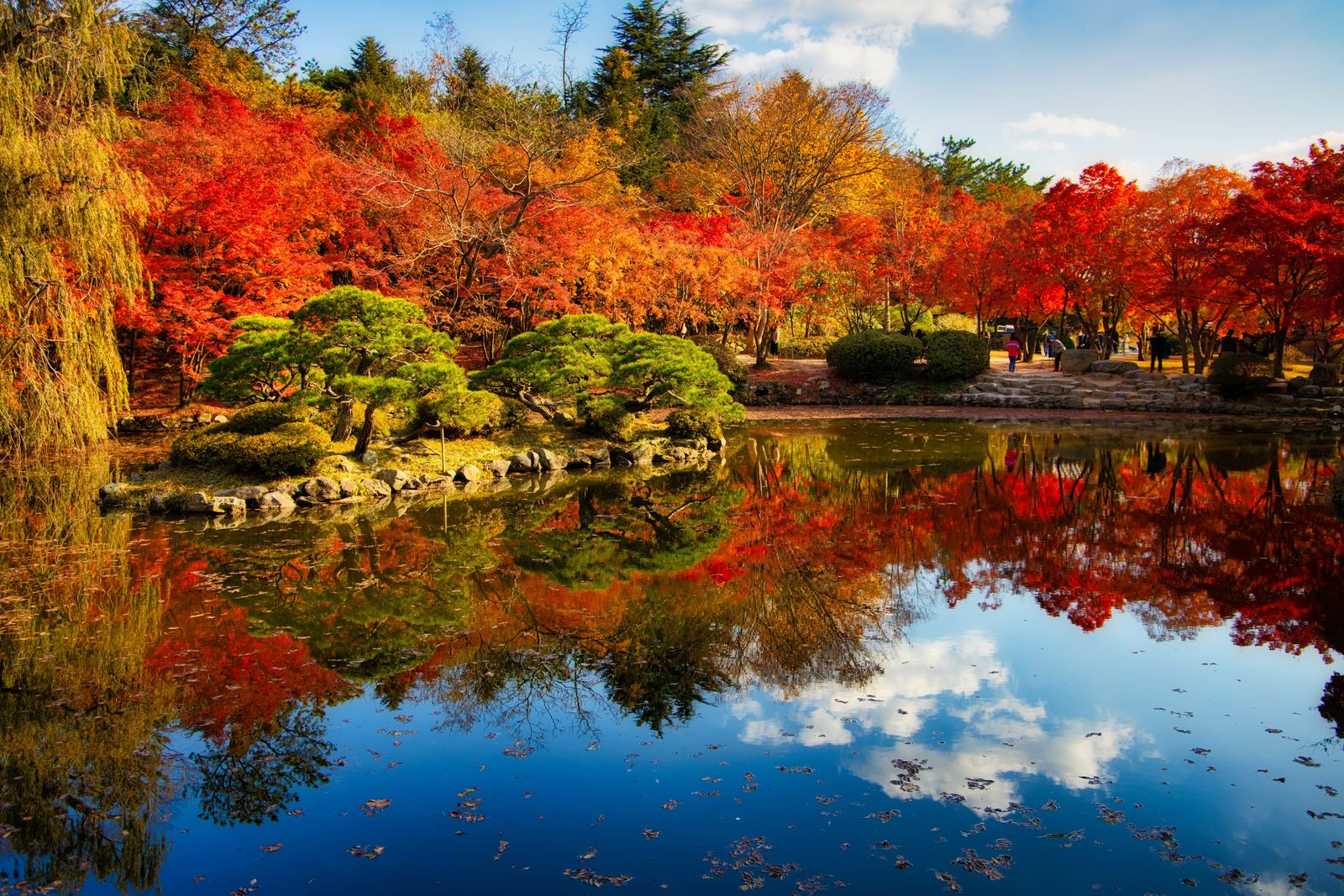
Autumn colour runs the other way, from north to south, and South Korea is first. On long-term averages the hills beside Seoul peak around 27 October and the parks of the south-west around 6 November.
In Japan the maples turn later. The Japan Meteorological Agency's average date for its observation trees is 21 November in Nara, 28 November in Tokyo and 5 December in Kyoto. The temples in the hills around Kyoto usually turn a week or two before the trees in the middle of the city.
So one holiday cannot be in both countries at their peak. The best compromise is to start in Seoul in the second week of November, when the south of the country is still in colour, and to reach Kyoto around the 20th.
South Korea is at its driest in autumn: Seoul has about 52 mm of rain in October against 414 mm in July. Japan's autumn starts wetter. October is Tokyo's wettest month on average, with about 235 mm, at the tail of the typhoon season, and November is much drier at about 96 mm. Seoul averages 15°C in October and 8°C in November; Kyoto and Tokyo average 18°C and 13°C.
Summer: June to August
Summer is the season to avoid if you can. Both countries have a rainy season. On the averages it runs from about 7 June to 19 July in Tokyo and Kyoto, and from 25 June to 26 July in Seoul.
After the rain comes the heat. August averages about 27°C in Tokyo, over 28°C in Kyoto and 26°C in Seoul, across day and night, and the humidity is high. Typhoons are most likely from July to September. Mid-August is also Obon in Japan, when families travel to their home towns and the trains are full.
Winter: December to February
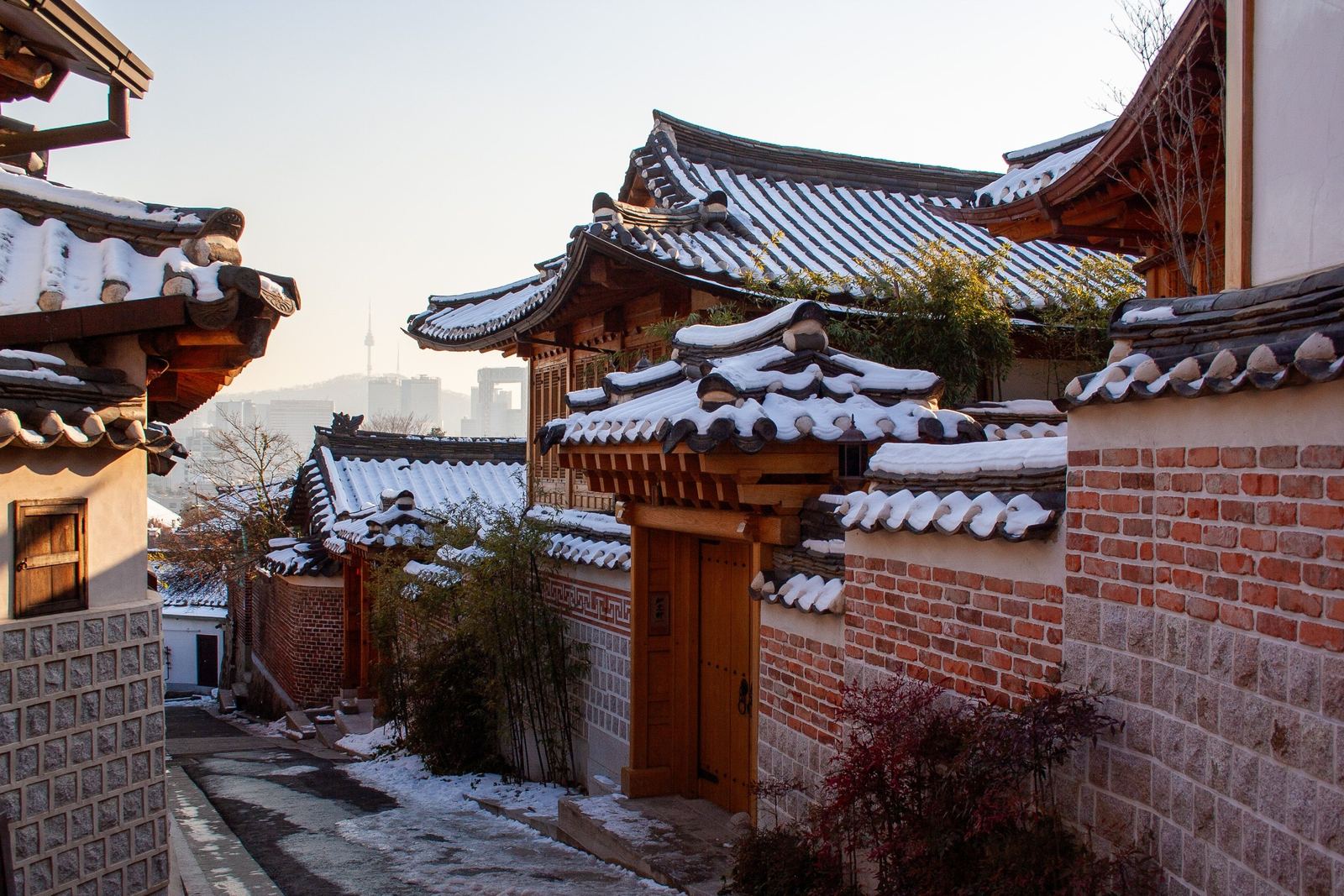
Winter is cold, dry and quiet in both countries, and much colder in South Korea. January averages about minus 2°C in Seoul against about 5°C in Tokyo and Kyoto. Skies are often clear, and this is the season when Mount Fuji is most often in view.
There are two holidays to plan around. In Japan many museums, gardens and restaurants close for several days either side of 1 January. In South Korea the Lunar New Year empties the cities and fills the roads; in 2027 it runs from 6 to 9 February.
The weeks to avoid, in one list
In Japan: 29 April to 5 May (Golden Week), the middle of August (Obon) and the days around New Year. In South Korea: the Lunar New Year (6 to 9 February in 2027) and Chuseok, the harvest festival (14 to 16 September in 2027). In both: the rainy season from June to late July, and the heat of August.
If your dates touch one of these, we plan around it and keep you in one place over the holiday itself.
Month by month at a glance
Average temperatures are for Seoul and Tokyo, across day and night. Afternoons are several degrees warmer. Kyoto is within a degree or two of Tokyo, and Busan is milder than Seoul in winter.
January: Seoul minus 2°C, Tokyo 5°C. Cold, dry and quiet. February: 1°C and 6°C. Still cold; avoid the Lunar New Year in South Korea. March: 6°C and 9°C. Cool, with blossom in Tokyo in the last week.
April: 13°C and 14°C. Cherry blossom in both; busy. May: 18°C and 19°C. Warm and green; avoid the first week in Japan. June: 23°C and 22°C. The rains begin, first in Japan.
July: 25°C and 26°C. Hot, humid and wet. August: 26°C and 27°C. The hottest month in both. September: 22°C and 23°C. The heat eases; typhoons are still possible, and Chuseok falls in the middle of the month in 2027.
October: 15°C and 18°C. Dry and clear in South Korea, with colour around Seoul in the last week; wetter in Japan. November: 8°C and 13°C. Dry in both, with autumn colour in Japan in the second half. December: 0°C and 8°C. Cold, clear and quiet.
What it means for the price
Our Japan and South Korea holidays cost from £3,760 per person for 12 nights with return flights from London, and that price is available for most of the year. Over Easter, the summer school holidays and December we can usually hold it only if you book early. The cost guide has the detail, and the routes are on our Japan and South Korea holidays page.
For each country on its own, see the best time to visit South Korea and the best time to visit Japan.
Facts checked by our Japan and South Korea team on 27 November 2026.

