The dates, city by city
Japan first. On the Japan Meteorological Agency's averages for 1991 to 2020, the first flowers open in Tokyo on 24 March and the trees reach full bloom on 31 March. Kyoto opens on 26 March and is in full bloom on 4 April. Osaka and Nara are within a day or two of Kyoto.
Then South Korea. On the Korea Meteorological Administration's averages, blossom opens on Jeju Island around 25 March and reaches the south coast, around Busan, at about the end of the month. It opens in Seoul on 8 April, with full bloom on 10 April.
So the order is Tokyo, then Kyoto and Busan at about the same time, then Seoul, with about ten days between the first full bloom and the last. From full bloom the trees hold their flowers for about a week, and for less if it rains hard or the wind gets up.
A route that follows the blossom
Start in Japan. This is our sixteen-night route turned round: four nights in Tokyo, four in Kyoto, a flight from Osaka to Busan, two nights in Busan, two in Gyeongju and four in Seoul.
On the average dates it works like this. Arrive in Tokyo around 27 March, as the trees come into full bloom. Move to Kyoto on the 31st and be there for its best days. Fly to Busan on 4 April and spend two nights on the coast and two in Gyeongju, where cherry trees line the roads around the royal burial mounds. Reach Seoul on 8 April, the average day the blossom opens there, and fly home on the 12th.
As a holiday it costs from £4,295 per person with return flights from London, for two people sharing a twin room. In 2027 these dates fall over Easter, when we can usually hold that price only for early bookings. What the price covers is in our cost guide.
Where you see it
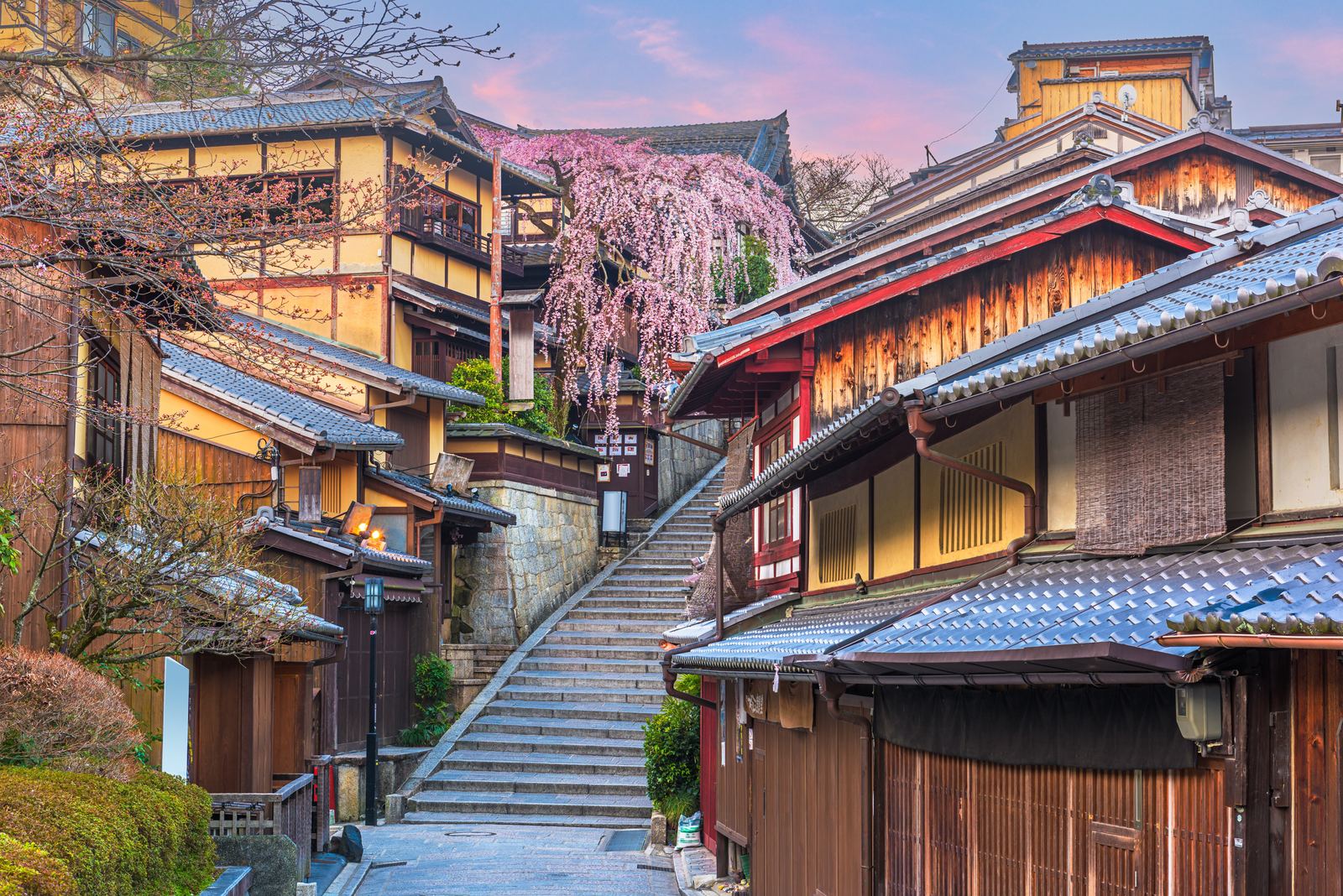
In Tokyo, the moat of the Imperial Palace at Chidorigafuchi and the wide lawns of Shinjuku Gyoen. In Kyoto, the Philosopher's Path, a canal walk under cherry trees, and the old lanes of Higashiyama below Kiyomizu-dera.
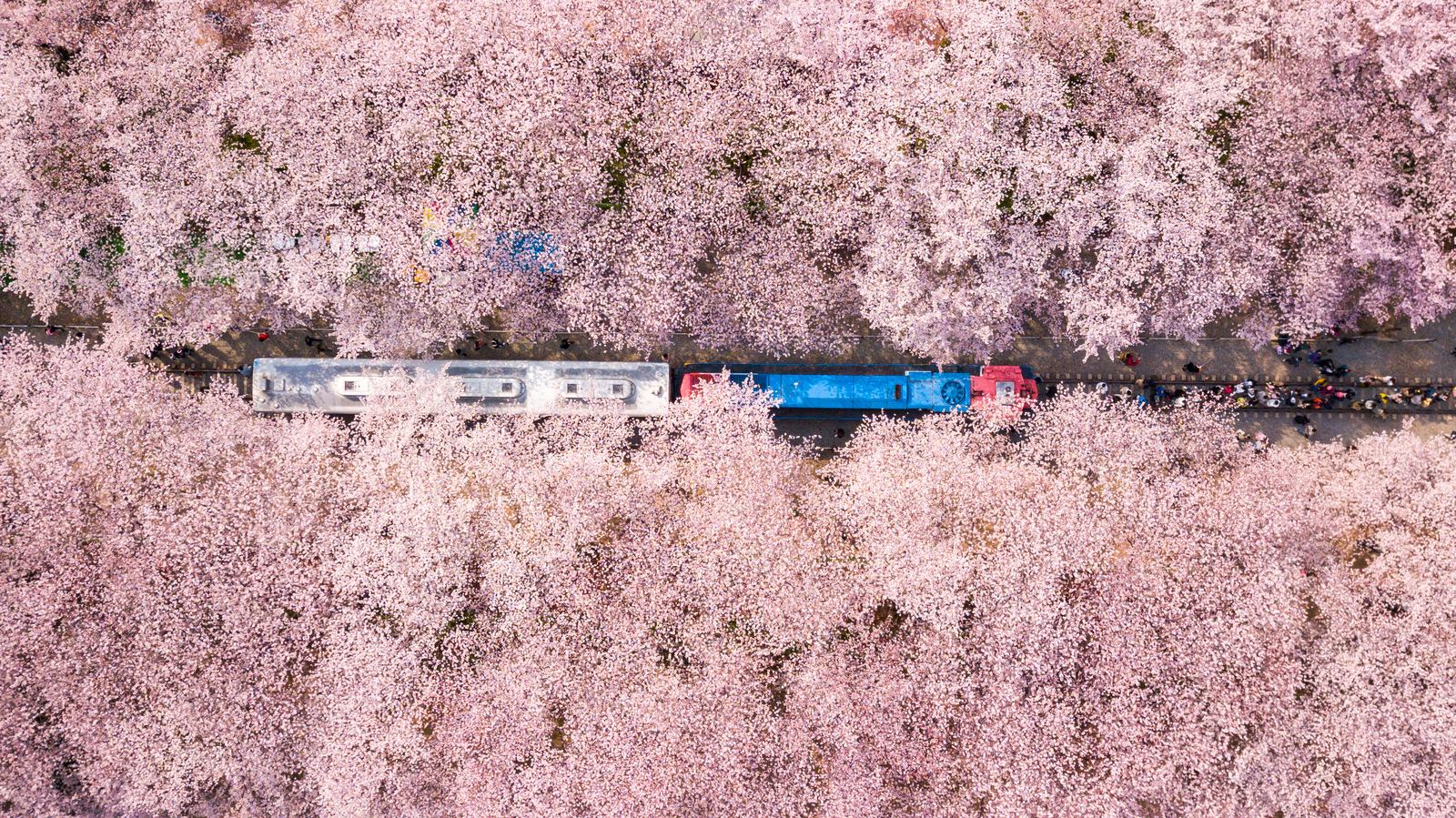
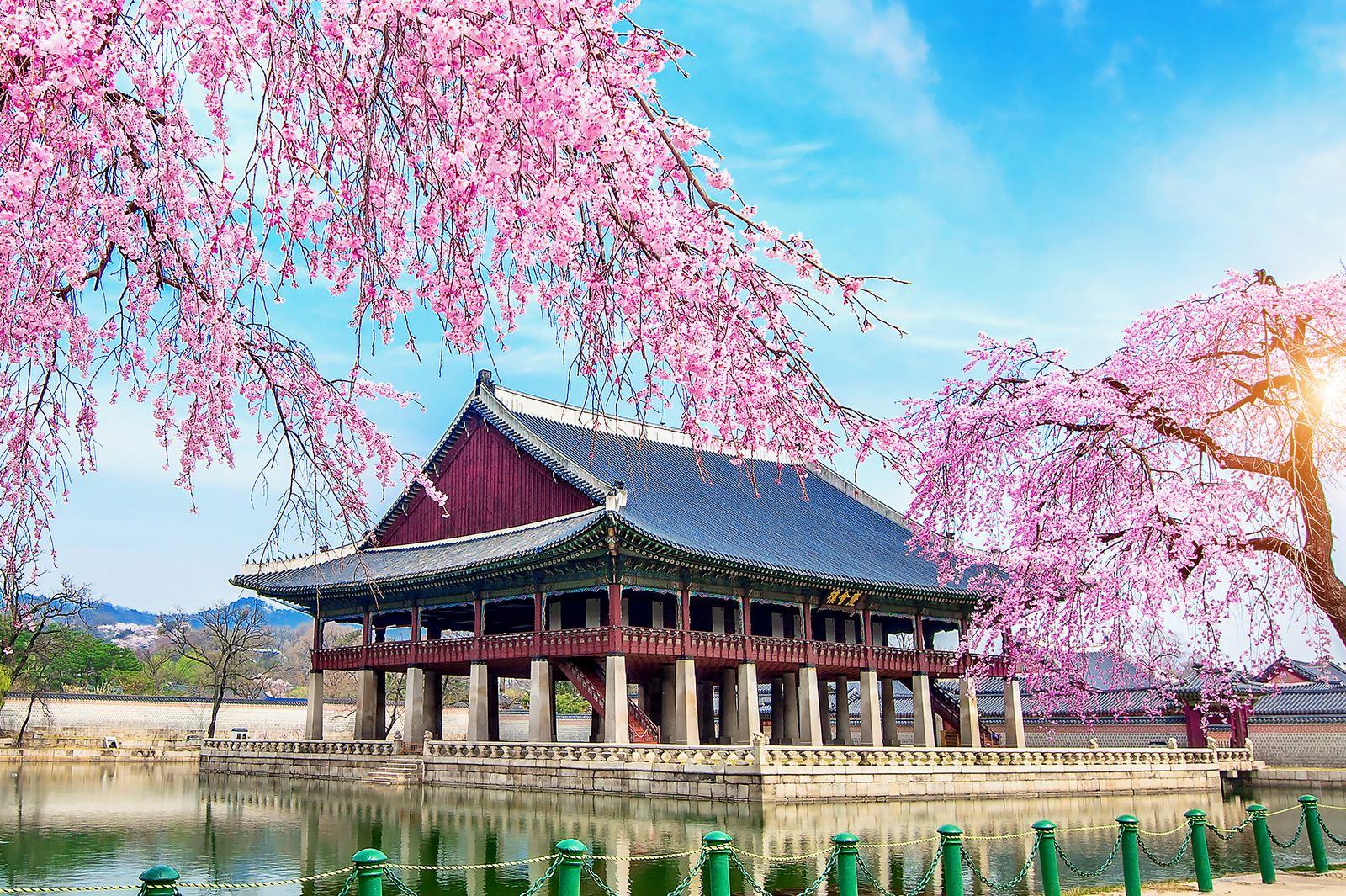
In South Korea, the grounds of Gyeongbokgung Palace in Seoul, the lake at Bomun in Gyeongju, and Jinhae, a naval port near Busan whose streets and railway line run under cherry trees. Jinhae holds the country's best-known blossom festival at the turn of March and April.
If the blossom is early or late
The dates move. In 2026 Tokyo was in full bloom on 28 March and Kyoto on 30 March, three and five days ahead of the average. A cold March pushes them the other way.
Two things protect you. The first is the route itself: with about twelve days between the first city and the last, a shift of a few days still leaves you in blossom somewhere, and usually in several places. The second is that the holiday is private. Until the hotels are booked we can move your dates, and once you are there your guide can take you to whichever gardens are at their best that week.
What we cannot do is promise blossom on a particular day, and no one can. If your dates are fixed, the first week of April gives the best odds across both countries.
Crowds, and how to avoid the worst of them
This is one of the busiest times of the year in Kyoto and Tokyo, and the best-known spots are crowded, at weekends above all. We plan the famous places for early in the morning and on weekdays, and leave the middle of the day for quieter gardens.
South Korea is busy in April too. Spring also brings the occasional day of fine dust to Korean cities, when the air is hazy; on those days your guide can swap an outdoor visit for an indoor one.
The well-placed hotels in Kyoto fill early for these weeks. If you want blossom dates, six months ahead is not too soon.
More on spring, and the alternative
For each country on its own, see South Korea in April and, if you walk but not far, cherry blossom in Japan with limited mobility.
If the crowds put you off, autumn is the other great season, and the colour lasts longer than the blossom. Our guide to the best time to visit Japan and South Korea compares the two.
Facts checked by our Japan and South Korea team on 27 November 2026.

