The route at a glance
Seoul for four nights, Busan for two, Kyoto for three and Tokyo for three. With the overnight flight from London at the start, that is two weeks from door to door.
There are three journeys in the middle. The KTX high-speed train takes you from Seoul to Busan in about three hours. A direct flight from Busan to Osaka takes about an hour and a half. The bullet train from Kyoto to Tokyo takes a little over two hours.
As a holiday with us it costs from £3,760 per person with return flights from London, for two people sharing a twin room. What that includes is set out on our Japan and South Korea holidays page.
Days 1 to 4: Seoul
You fly overnight from London and land in Seoul the next day, after a direct flight of about 13 hours. Day 1 is that arrival: you are met at the airport and driven to your hotel, and nothing more is planned.
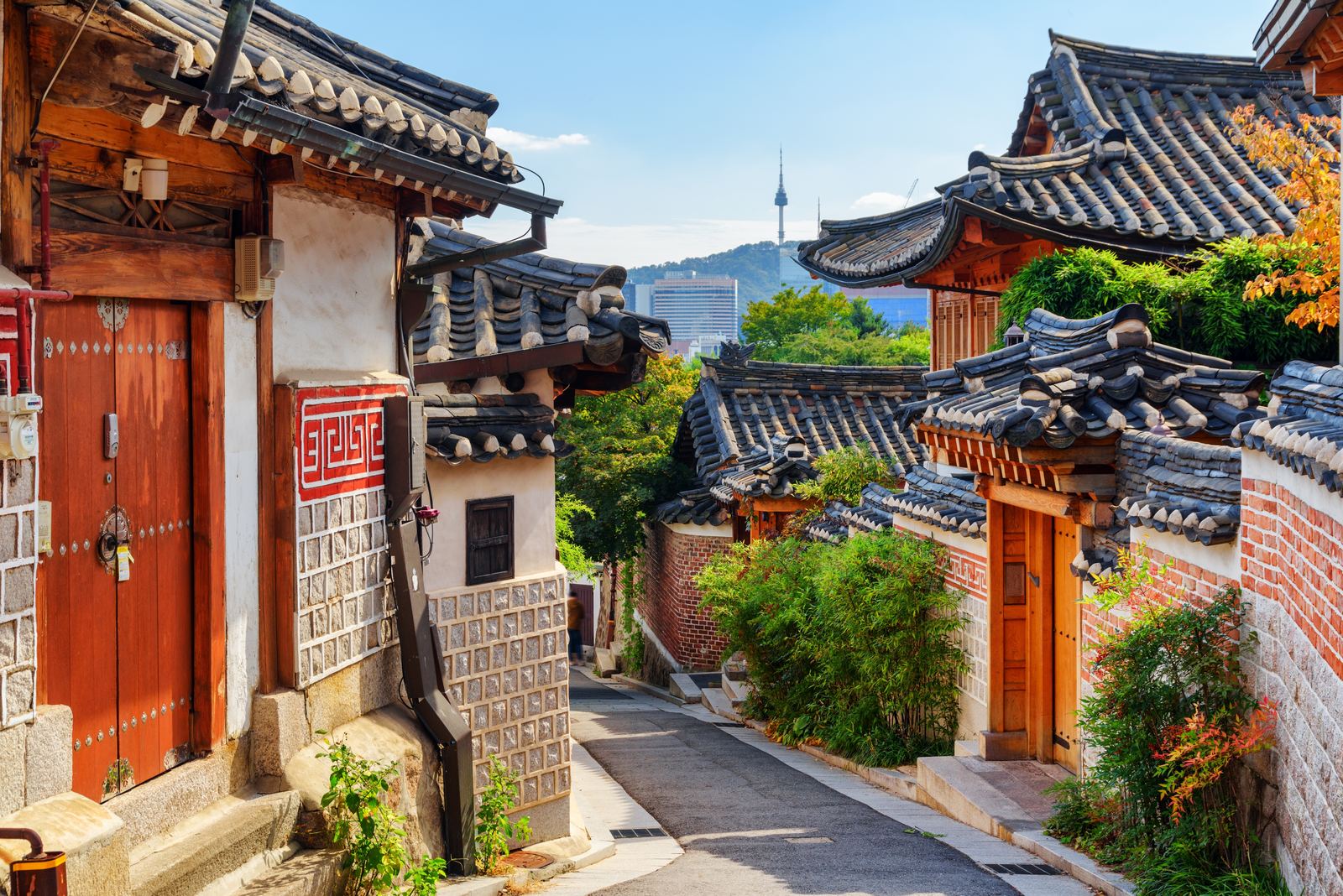
Day 2 is for the royal city. Gyeongbokgung is the largest of the palaces, and the changing of the guard at its main gate is held at ten in the morning and two in the afternoon, every day except Tuesday. From there it is a short drive to Bukchon, a hillside quarter of traditional tiled houses, and to the tea houses and craft shops of Insadong. Expect to walk about four kilometres over the day.
Day 3 can go two ways. Many people take the day trip to the Demilitarised Zone, the border that has divided the peninsula since 1953. Others would rather have a second, slower day in the city, at Changdeokgung Palace and its garden.
Day 4 is free. After a long flight and a time difference of eight or nine hours, a day with no timetable before the first journey is worth having.
Days 5 and 6: Busan
On day 5 the KTX takes you from Seoul to Busan in about three hours, in reserved seats. Busan is the country's second city and its main port. The afternoon is for the sea front at Haeundae, which is flat and paved.
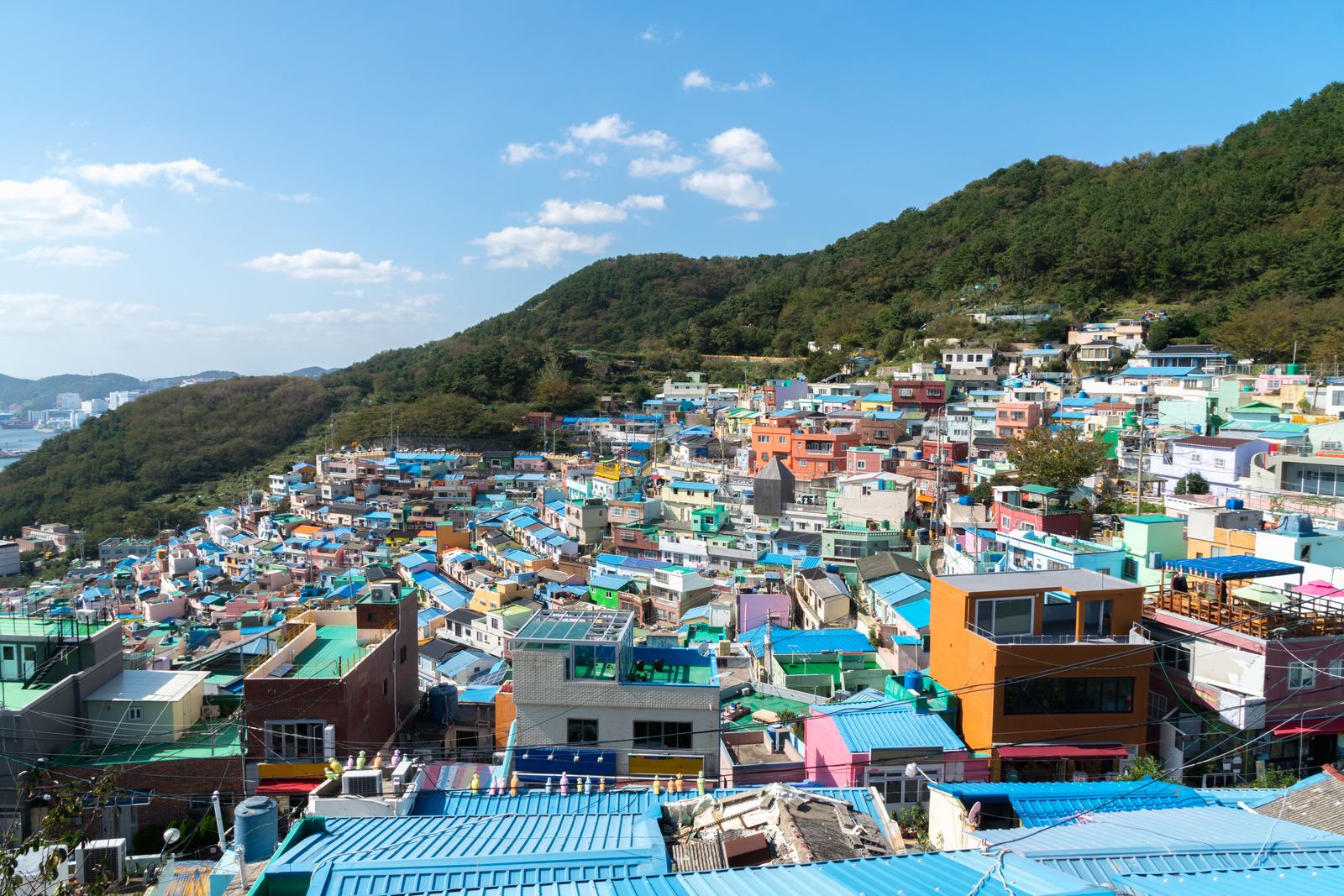
Day 6 covers the city. Gamcheon Culture Village is a hillside of brightly painted houses; it is steep in places, so we keep to the upper lanes and the viewpoints. Jagalchi is the country's best-known fish market. Many people also visit Haedong Yonggungsa, a temple built on the rocks above the sea, which is reached by a long flight of steps; there is a viewpoint for those who would rather not go down.
Day 7: the flight to Japan
The flight from Busan to Osaka takes about an hour and a half, and several leave each day. A private car takes you to the airport in Busan and another meets you at Kansai airport, for the drive of about an hour and a half to Kyoto. By the evening you are settled in your second country.
This is the only day of the holiday given over to travel, and it is the reason we use Busan and Osaka: the flight joins the end of the Korean route to the start of the Japanese one without doubling back.
Days 8 and 9: Kyoto
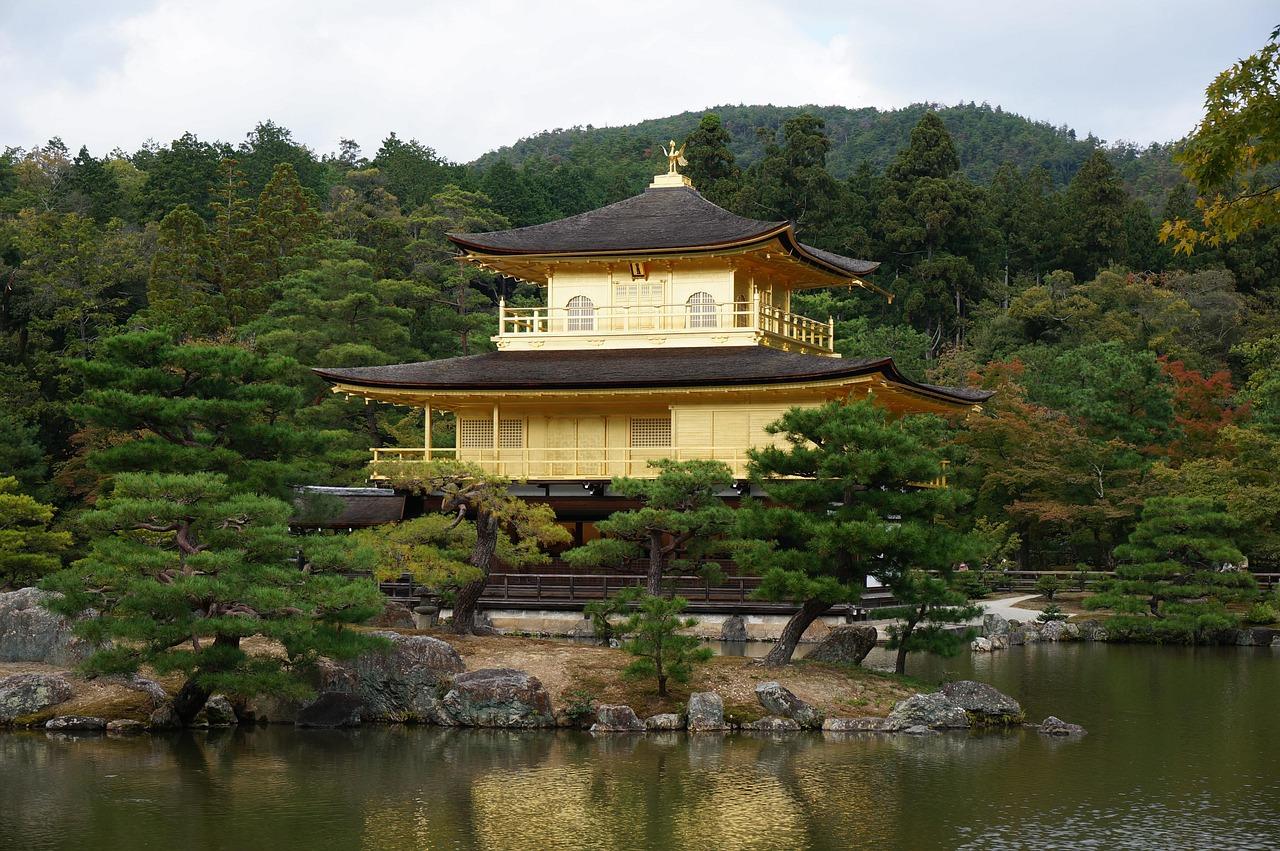
Kyoto was Japan's capital for more than a thousand years, and it has the temples and gardens to show for it. Day 8 starts early at Fushimi Inari, the shrine whose thousands of red gates climb the hillside. The full path to the top takes about two hours; the lower gates are the finest part and take about 45 minutes there and back. The Golden Pavilion, Kinkaku-ji, fills the rest of the morning.
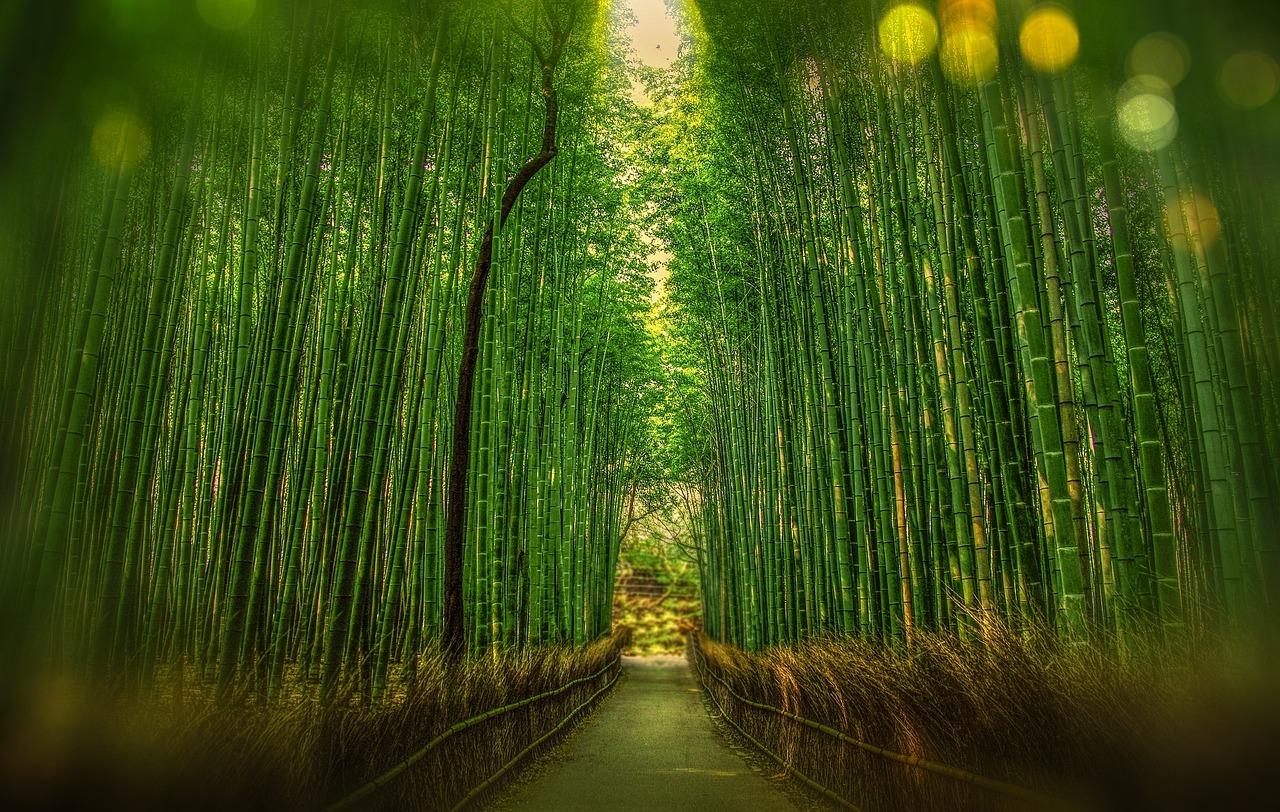
Day 9 is Arashiyama, on the western edge of the city: the bamboo grove, the garden of Tenryu-ji temple and the river. The afternoon is free, for the old lanes of Gion or simply a rest.
Days 10 to 13: Tokyo, and home
On day 10 the bullet train takes you from Kyoto to Tokyo in a little over two hours. Your main suitcases are sent ahead to the hotel, so you board with a small bag. On a clear day Mount Fuji is on the left of the train, about forty minutes before Tokyo.
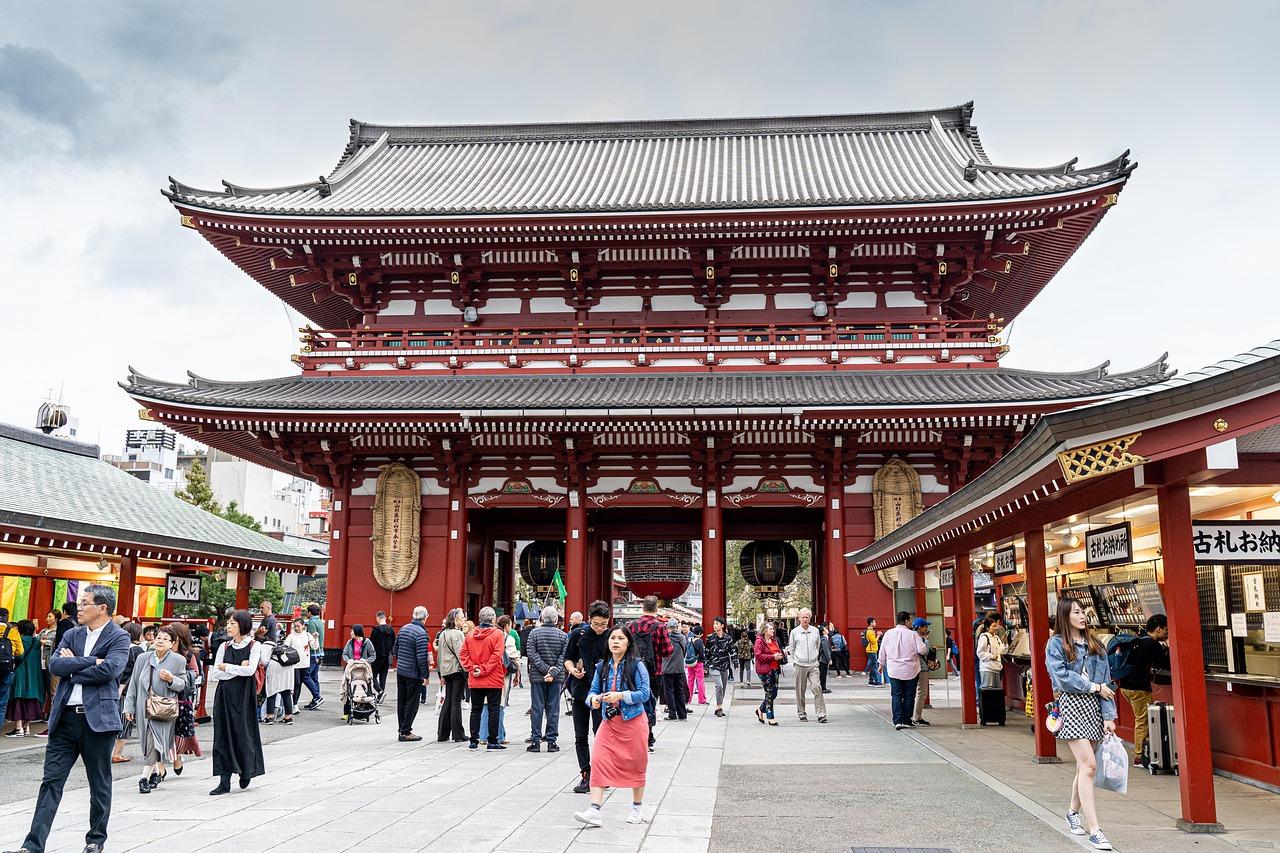
Day 11 is for old and new Tokyo: Senso-ji temple in Asakusa, a garden, and the food halls beneath the department stores. Day 12 is free.
On day 13 you are driven to the airport for the direct flight to London. It takes about 14 hours and lands the same day.
How much walking it involves
On our day plans for both countries, a sightseeing day comes to between three and five kilometres on foot, spread through the day, and a travel day to about two. The palaces of Seoul and the Busan sea front are flat. The steps and slopes are at Gamcheon and the seaside temple in Busan and on the path at Fushimi Inari, and each has an easier way to see it.
In South Korea a private car is with you on the sightseeing days, which cuts the walking a good deal. If you walk but not far, see South Korea for the over-70s and Japan at an easy pace.
If you have longer
Sixteen nights is the length we recommend. It adds two nights in Gyeongju, between Seoul and Busan, for Bulguksa Temple and the royal burial mounds of the old Silla capital. It also adds a fourth night in both Kyoto and Tokyo, which makes room for a day among the deer and the great temple at Nara. It costs from £4,295 per person with return flights from London.
Nineteen nights adds two nights at a traditional inn in Hakone, with hot-spring baths and a view of Mount Fuji when the weather allows, and a third night in Busan. It costs from £4,910 per person with return flights from London.
Which way round, and when
The route above runs South Korea first. In spring we usually turn it round and start in Japan, because the cherry blossom reaches Tokyo and Kyoto about a week before Seoul: see Japan and South Korea in cherry blossom season. In autumn South Korea first is right, because the colour arrives there earlier.
April, May, October and November are the best months for both countries at once. Our guide to the best time to visit Japan and South Korea goes through the year, and the cost guide explains what the price covers.
Facts checked by our Japan and South Korea team on 27 November 2026.

