South Korea in April: weather you can rely on
April sits in the sweet spot of the South Korean calendar. In Seoul, the long-term average temperature across day and night is 12.6°C, with afternoons typically several degrees warmer — comfortable walking weather with a light jacket for the evenings. The cold, grey days of January (averaging -1.9°C) are well behind you, and the heavy summer rains that arrive in late June are still some weeks away.
Rainfall in April is modest compared with the summer months. The rainy season (known as jangma) does not reach Seoul until around 25 June on long-term averages, so an April visit sits comfortably outside it.
In the south — Gyeongju, Busan, Jeonju — temperatures are a little warmer than Seoul. On Jeju Island, spring arrives earlier still. Conditions across the country in April are well suited to unhurried sightseeing on foot.
Cherry blossom in April: when and where it peaks
On long-term averages, cherry blossom opens in Seoul around 8 April, reaching full bloom around 10 April. The dates move by up to a week from year to year — an earlier warm spell can push them to late March, a cold spring can delay them into mid-April. On Jeju Island the blossom is typically about two weeks ahead of Seoul, opening around 25 March.
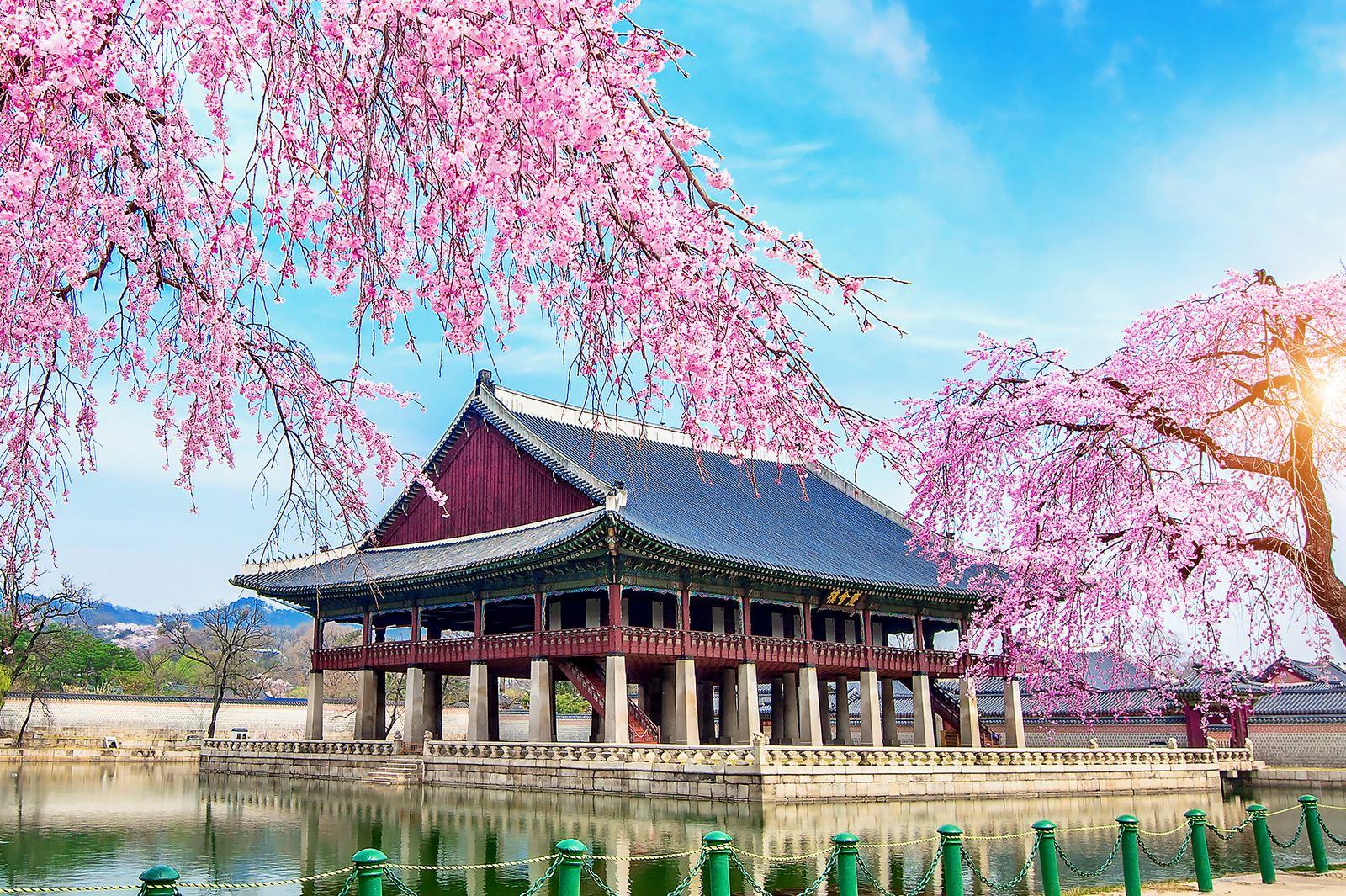
The five royal palaces of Seoul — Gyeongbokgung, Changdeokgung, Changgyeonggung, Deoksugung and Gyeonghuigung — are among the finest blossom-viewing settings in the country. Gyeongbokgung's Gyeonghoeru Pavilion reflected in its pond, with the blossom framing the eaves, is a sight that stays with you. The free English guided tours of Gyeongbokgung run Wednesday to Monday at 11:00, 13:30 and 15:30 from the information centre inside Heungnyemun Gate — they last about an hour to an hour and a half.
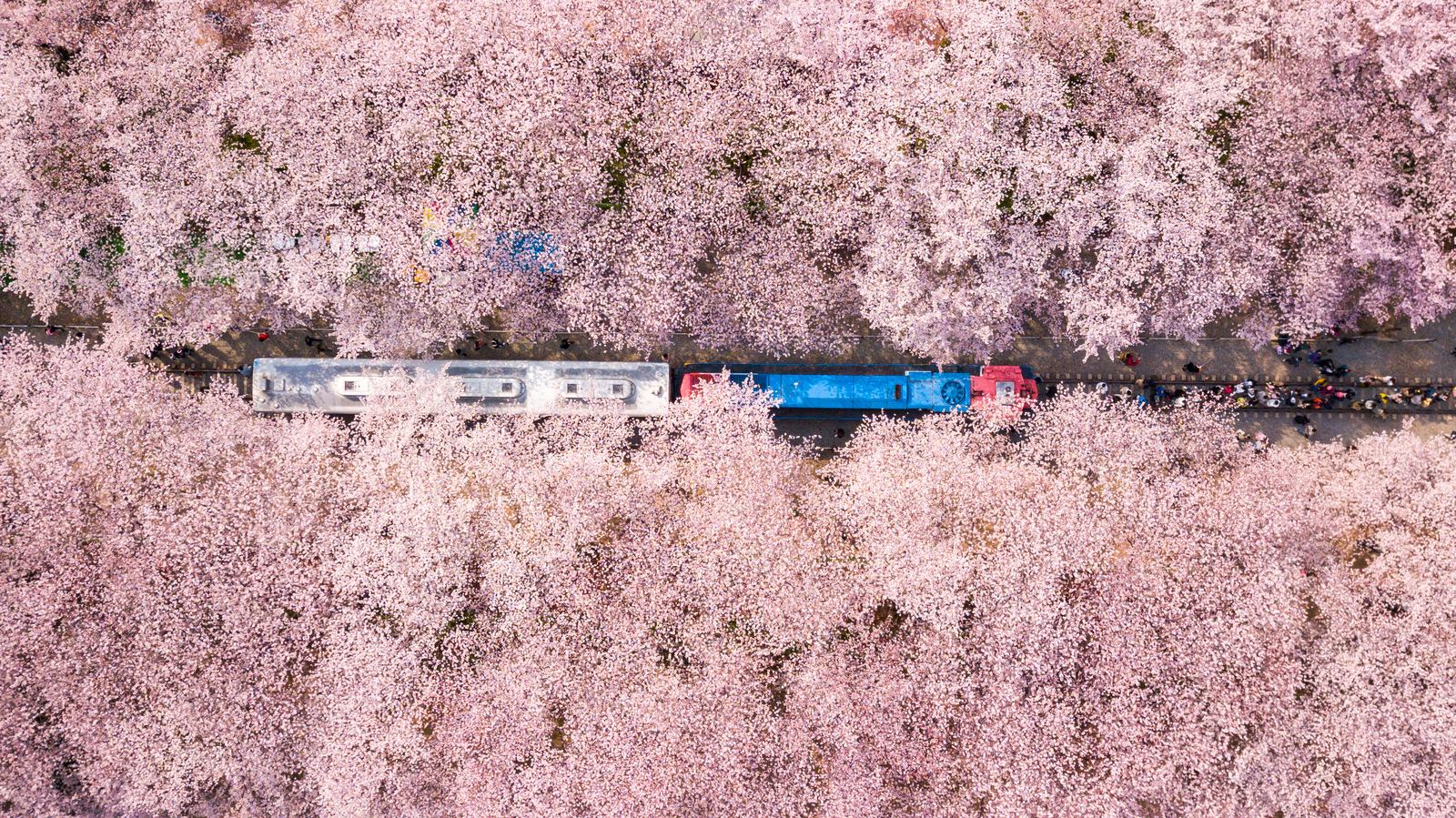
Jinhae, in the south, holds one of Korea's most famous blossom festivals, with a train line running through a tunnel of flowering trees. Our cherry blossom and autumn colours tour is built specifically around these two seasons, and the 14-day complete tour also takes in spring blossom in Seoul and Gyeongju.
How busy is South Korea in April?
April is busy. In 2025, it was the third-busiest month of the year for international visitors to South Korea, with around 1.71 million arrivals. Only August (the summer peak) and October (the autumn-colour season) drew more. The most popular sights — Gyeongbokgung in Seoul, Bulguksa Temple in Gyeongju, Seongsan Ilchulbong on Jeju — will have visitors throughout the day.
A private holiday makes a real difference in April. Rather than travelling with a fixed group timetable, your own guide and driver give you the flexibility to visit the most popular places early in the morning, to linger where you want to and to move on when the crowds arrive. See our South Korea tours compared for private options at different paces.
Gyeongbokgung is closed on Tuesdays. If you plan to visit, avoid arriving on a Tuesday — if a public holiday falls on a Tuesday, the closure moves to the following day. The Changing of the Royal Guard Ceremony, held at 10:00 and 14:00 every day except Tuesdays, may be cancelled in heavy rain.
Gyeongju in April: temples and ancient tombs in blossom
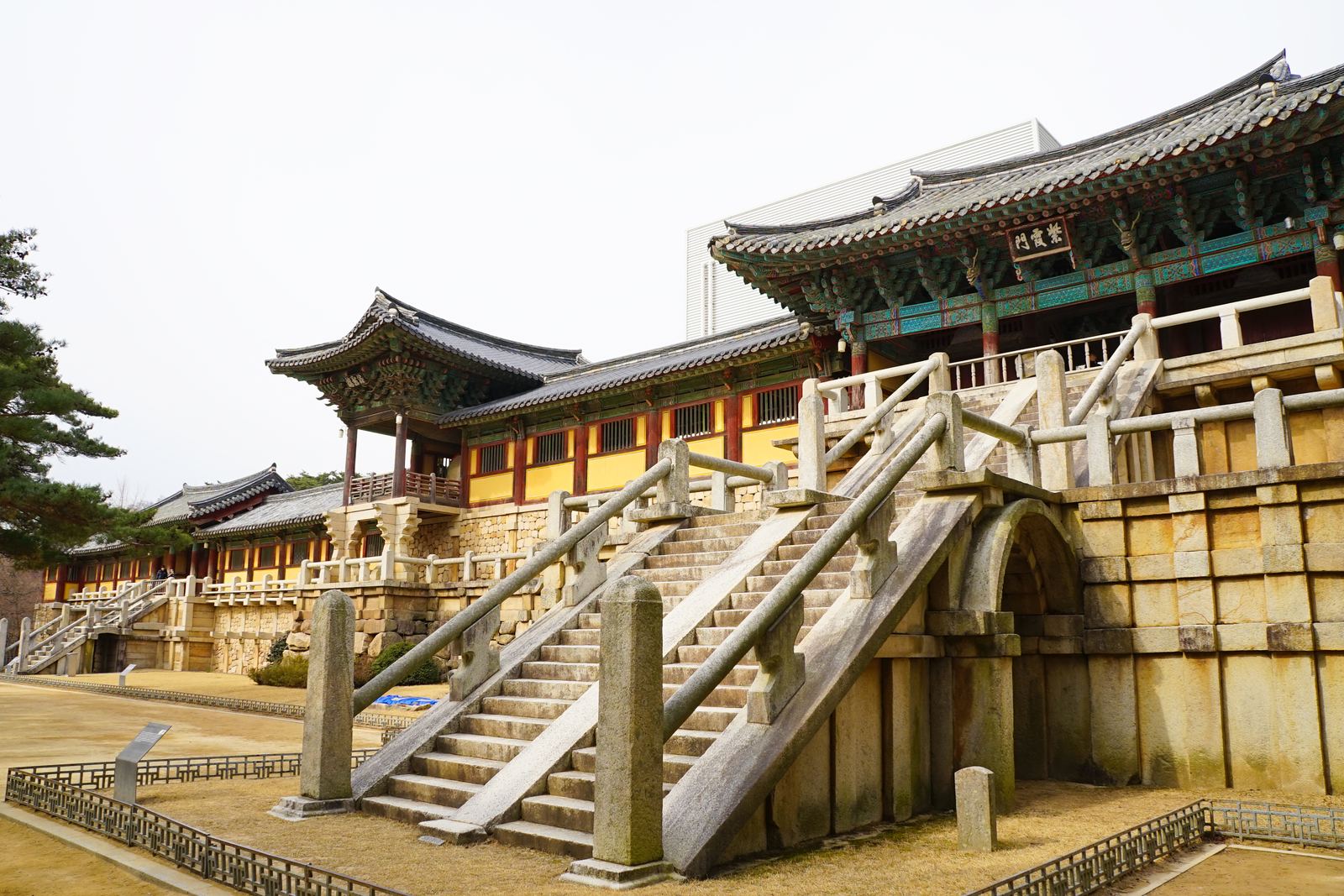
Gyeongju, South Korea's ancient Silla capital for nearly a thousand years, is one of the most rewarding places to visit in April. Bulguksa Temple — begun in 751 and completed in 774 during the Silla kingdom, and a UNESCO World Heritage site since 1995 — is surrounded by wooded hillsides that are at their freshest in spring. The temple is open from 09:00 to 18:00, with free admission.
About 3 km away by trail (or 9 km by car), Seokguram Grotto houses a granite seated Buddha about 3.5 m high facing the East Sea. It too is open from 09:00 to 18:00, with free admission.
The Daereungwon Ancient Tombs park, with Cheonmachong as the one tomb open to the public, opens from 09:00 to 21:30. Cheomseongdae Observatory — the Korea Tourism Organization describes it as the oldest existing astronomical observatory in Asia, built in the 7th century — is free to visit and stays open until 22:00 in the warmer months. Our 9-day classic tour includes Seoul, Gyeongju and Busan at an unhurried pace.
South Korea in April with limited mobility
April's mild temperatures and dry days make it one of the most comfortable months to manage mobility on foot. In Seoul, the Royal Palace Pass (6,000 won, covering four palaces and Jongmyo Shrine) lets you spread the palaces over separate days instead of rushing them.
In Gyeongju, the National Museum is free to enter and lends wheelchairs at no cost. Bulguksa's stone stairways are steep, so allow time there and ask your guide for the gentlest way in. The Seokguram Grotto is about 9 km from Bulguksa by car, so a private vehicle makes the visit straightforward.
The KTX high-speed train between Seoul and Gyeongju takes about two hours; between Seoul and Busan about three hours. For a full picture of pacing and access across a South Korea holiday, see our guide to South Korea for the over-70s. For general accessible holidays advice, our main accessibility page has the broader picture.
Planning a South Korea holiday in April
April is an excellent choice — mild, dry and visually stunning — but it rewards a little planning. Book accommodation and any timed-entry tickets (such as the Changdeokgung Secret Garden, which is capped at 100 visitors per session) as early as you can. The Secret Garden needs a separate ticket on top of palace admission, entry is only at the printed time, and late arrival means no refund.
If you are combining South Korea with Japan, see our guide to Japan and South Korea in one holiday — both countries have their cherry blossom at a similar time, though Japan's season typically runs a few days ahead.
For how long to spend in Seoul specifically, our South Korea itinerary guide for 10 days gives a practical day-by-day structure, and two weeks in South Korea covers a longer trip including Jeju Island.
Tell us your needs and we will check the details for your dates.
Facts checked by our South Korea team on 24 November 2026.
