Getting up to Koyasan
From Gokurakubashi Station at the foot of the mountain, a cable car takes about five minutes up to Koyasan Station, then a bus takes about ten minutes into the town centre. Walking along the road between the cable car station and the town is not permitted, so the bus is the way in.
Nankai lists a lift, a wheelchair-accessible toilet and wheelchairs on hand at Koyasan cable car station. Gokurakubashi Station at the bottom has an accessible toilet and wheelchairs on hand but no lift listed, so check the station layout before you travel.
The town and its main sights
Koyasan sits at about 1,000 metres above sea level and the town is fairly flat, which is a relief after the journey up. The Garan complex, Kongobuji temple and the Reihokan Museum are all a short walk from the central Senjuinbashi crossroads. Okunoin, the great cemetery and mausoleum, is at the eastern edge of town.
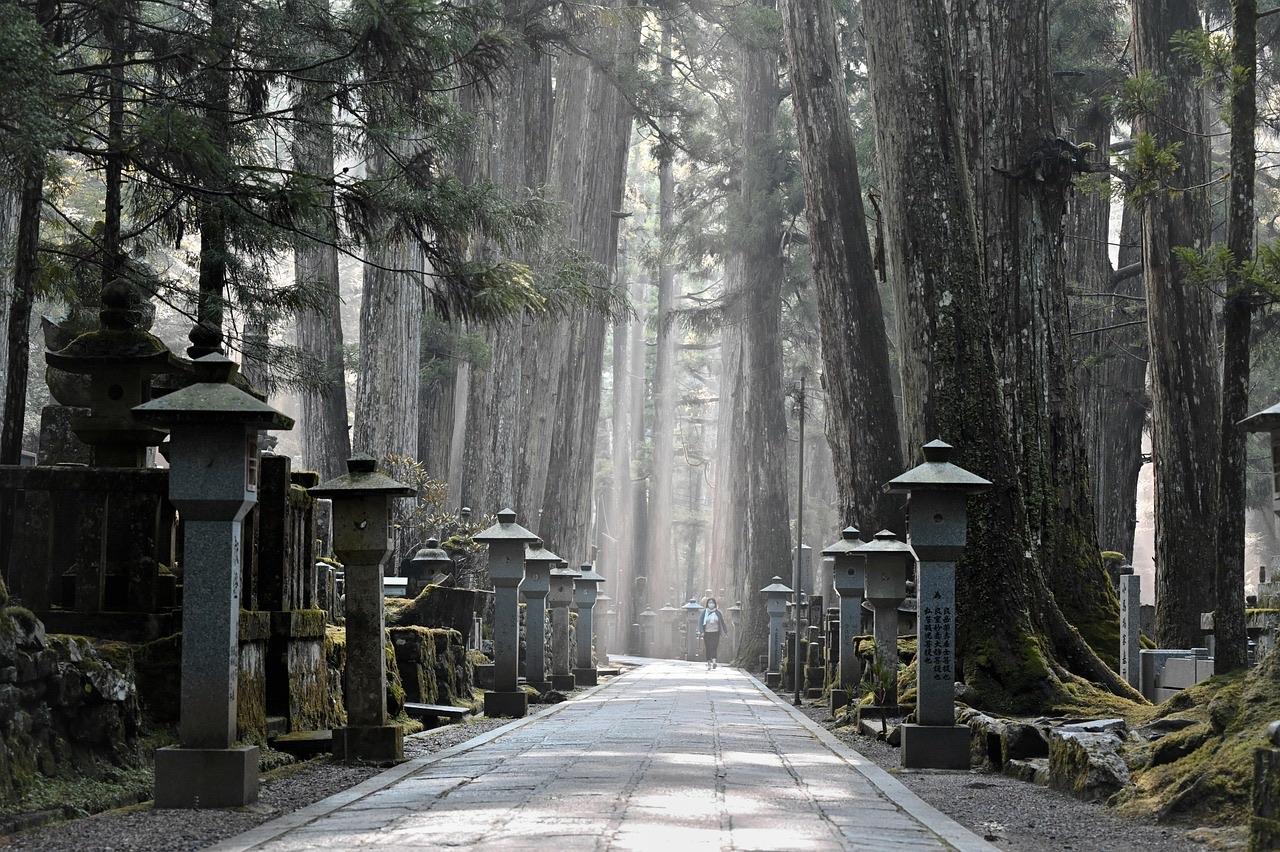
Buses to Okunoin-mae run two or three times an hour and take about 20 minutes from the cable car station or 10 minutes from the town centre. The traditional approach to Kobo Daishi's mausoleum at Okunoin runs almost 2 kilometres from Ichinohashi Bridge, between cedars and stone lanterns. Most visitors use the shorter route from Okunoin-mae bus stop, which is just under 1 kilometre. You can walk in at night, but parts of the path are poorly lit and the halls are closed, and photography, food and drink are not allowed beyond Gobyobashi Bridge.
Loan wheelchairs at the temples
Loan wheelchairs are kept at the main sites across Koyasan: six at Kongobuji, three at Danjo Garan, five at the Reihokan Museum and seven at Okunoin. These chairs are mainly intended for indoor use. If you need an outdoor wheelchair for the paths between sights, the Koyasan Taishi Kyokai is the contact point.
At Kongobuji you take your shoes off on entering, and the visit continues along a long corridor to a large tatami hall where tea is served. That is worth knowing in advance if removing shoes is awkward for you.
Koyasan with limited mobility
The cable car and bus take care of the climb, and the town itself is fairly flat. The longest walk is at Okunoin, and the route from Okunoin-mae bus stop cuts it to just under a kilometre.
The temples ask more of you: at Kongobuji, shoes come off at the entrance and the visit runs along a long corridor to a tatami hall. If you need a wheelchair on the paths between sights, ask the Koyasan Taishi Kyokai about an outdoor chair, as the temple loan chairs are mainly for indoor use.
For more on travelling in Japan with a wheelchair or limited mobility, see our accessible Japan holidays page.
Temple lodgings: what to ask for
Staying in a shukubo, a temple lodging, is one of the things that makes Koyasan different. Rooms are usually simple tatami rooms with shared toilets and sinks, and beds are futons laid on the tatami floor at night; gas heaters keep rooms warm in winter. Plan to arrive by 17:00, as dinner is usually at 17:30 or 18:00. Morning prayers usually start around 6:00 and last 30 to 45 minutes, and the baths are communal and separated by gender.
If getting up from a futon on the floor is hard for you, ask the lodging directly before you book. Elsewhere in Japan, more ryokan now offer rooms with beds, and the Japan Tourism Agency says simply ask; our guide to Japan ryokan with limited mobility has the questions to put to them.
Koyasan is on our Japan Grand Tour.
Practical notes
Declare all your conditions when you buy travel insurance; if you are refused cover, use the MoneyHelper directory of specialist insurers. Our Japan over-70s accessibility guide has more on pacing a Japan trip.
Tell us your needs and we will check the details for your dates.
Facts checked by our Japan team on 23 November 2026.
